US Midterms 2026: Why Trump’s Republicans Lost the House and Senate
Democrats won both houses of Congress and flipped Senate seats in Texas, Kansas and South Carolina. Voters, Trump's own allies and analysts point to prices first.
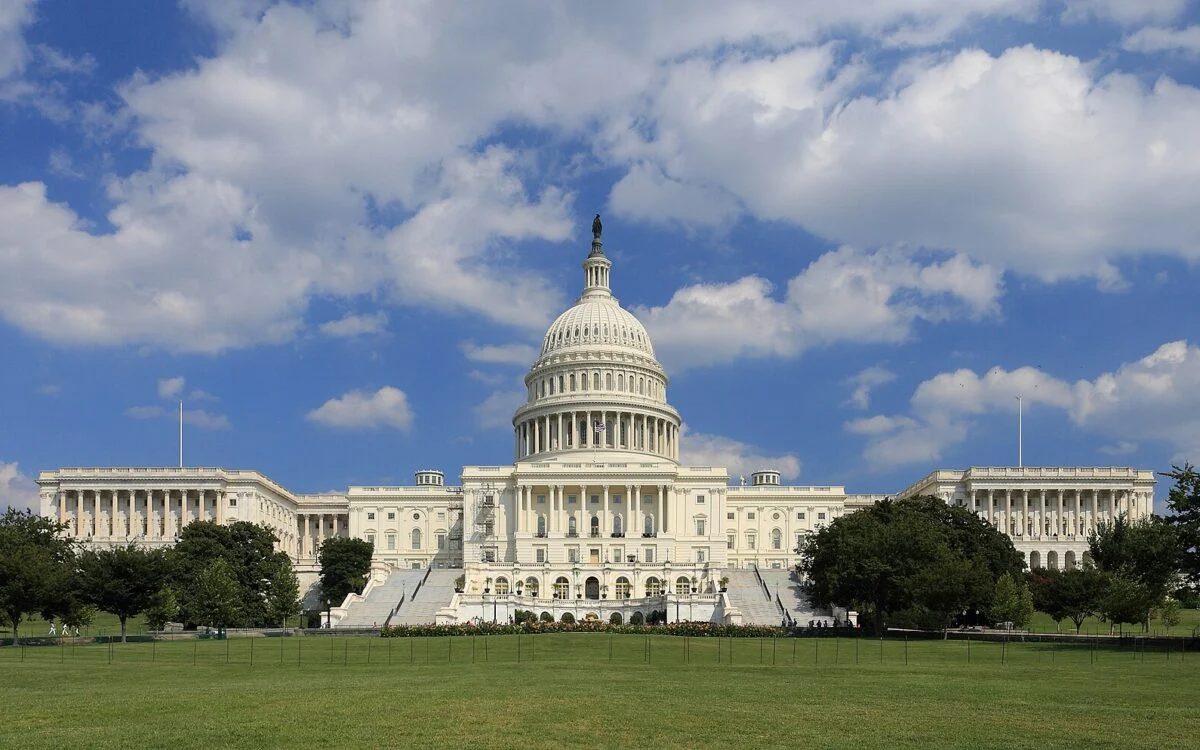
Image: Martin Falbisoner / Wikimedia Commons, CC BY-SA 3.0
Democrats won control of both houses of the US Congress in the midterm elections held on Tuesday, 3 November 2026, ending the Republican hold on the White House, the House of Representatives and the Senate two years into Donald Trump’s second term. The Associated Press projected the Senate for Democrats just after 11:30 pm Eastern time on Tuesday, and the House early on Wednesday, when Johnny Garcia’s win in Texas’s 35th district took the party past the 218 seats needed for a majority.
The scale is what has shaken Washington. Democrats took Senate seats in Texas, Kansas and South Carolina, states their party had not won a Senate race in for decades, and beat Texas Governor Greg Abbott. Trump’s own allies are calling it the worst night for Republicans since 2006. This analysis sets out the result, what voters said in exit polls, and the explanations Republicans and analysts are now arguing over.
Seven Senate Seats and Two Dozen House Seats
Republicans went into the election holding the Senate 53 to 47 and the House 218 to 214, with one independent who votes with them and two vacancies. Democrats needed a net gain of four Senate seats and three House seats.
Also read Trump Pauses Russia-Linked Tariff Threat Facing India and China
In the Senate, Democrats flipped at least seven Republican seats, according to AP projections reported by Roll Call and Fox News:
- Texas: state legislator James Talarico beat Attorney General Ken Paxton, the first Democratic Senate win in Texas since 1988.
- Kansas: Methodist pastor Adam Hamilton beat Senator Roger Marshall. Kansas had not elected a Democrat to the Senate since 1932.
- South Carolina: paediatrician Annie Andrews beat Senator Darline Graham, appointed in July after the death of her brother, Lindsey Graham.
- Ohio: former senator Sherrod Brown beat Senator Jon Husted.
- Iowa: Josh Turek beat Representative Ashley Hinson for the seat of retiring Senator Joni Ernst.
- North Carolina: former governor Roy Cooper beat former Republican National Committee chairman Michael Whatley.
- Maine: Troy Jackson ended Susan Collins’s nearly 30-year Senate career. Collins conceded and pledged a smooth handover.
Democrats also held every seat they defended that has been called, including Georgia (Jon Ossoff), New Hampshire (Chris Pappas), Minnesota (Peggy Flanagan) and Michigan, where Abdul El-Sayed won. The Washington Examiner put the Democratic total at 54 or more, with some races, including Alaska, still being counted.
In the House, Democrats flipped more than two dozen Republican seats, and NBC News projected the gain could reach about 40, the Washington Examiner reported. Among the incumbents who lost were Scott Perry in Pennsylvania, Zach Nunn in Iowa and Jen Kiggans in Virginia. Democrats were also on track for a majority of state governorships for the first time in 16 years; Gina Hinojosa’s defeat of Abbott in Texas was the biggest upset. Republicans held Florida, where Byron Donalds won the governor’s race.
What Voters Said: Prices Came First
The exit polls point most clearly at the economy. CNN’s exit poll found that 90% of voters called the cost of living a “crucial” or “major” factor in their vote, about 75% were dissatisfied with the direction of the country, and two-thirds blamed Trump for worsening economic conditions, Forbes reported.
About 60% of voters disapproved of Trump’s performance, including about one in five people who had voted for him in 2024. CBS News put his approval in early exit polls at 38%, which it said was on track to be the lowest for a president at a midterm. About six in ten voters said Trump was a factor in their House vote, and Democratic voters were driven largely by opposition to him.
This was not a new problem. A year earlier, in December 2025, William Galston of the Brookings Institution wrote that half of Americans named prices, jobs or health care as their top worry, while only 21% picked the areas Trump had focused on most: immigration, crime, taxes and foreign policy. Galston found that 71% said prices had risen since Trump took office, and that independents, young voters and Hispanic voters who had moved towards Trump in 2024 were moving away.
The Iran War and Gas Prices
The single issue Republicans and conservative commentators name most often is the war with Iran and what it did to petrol prices. Gas prices jumped after the war began; in its second week, Trump called the rise “a little glitch” and said “we had to take this detour”. An NBC News poll at the time found only 36% approved of his handling of inflation and the cost of living.
On election night, Trump himself pointed to it. Asked why the war showed up in exit polls, he said on Fox News: “I think it’s the gasoline price.” Conservative commentators went further. Daily Wire host Matt Walsh wrote that Trump “launched an unpopular and pointless war. Gas prices are too high”, and The Federalist’s Sean Davis compared the result to 2006, when Republicans lost Congress during the Iraq war, Fox News reported.
Candidates Trump Picked
A second argument, made inside the party, is about candidates. Trump adviser Alex Bruesewitz called most Republican candidates “uninspiring, lazy, and thoroughly ineffective communicators”, and commentator Mary Katharine Ham said Trump “picked a bunch of the bad ones”. An unnamed Republican operative told the Washington Examiner the party recruited “absolute duds” for the Senate, naming Darline Graham and Michael Whatley.
Texas is the example both sides cite. Paxton, who faced years of legal and ethics controversies, beat incumbent Senator John Cornyn in a primary run-off before losing the seat to Talarico. Trump turned the candidate argument on his own nominees: “They didn’t like the candidates, and some of the candidates that I endorsed fought me,” he said.
Redistricting That Backfired
Before the election, Republican-led states redrew House maps in the middle of the decade to add Republican seats, starting with a Texas map creating five Republican-leaning districts that the US Supreme Court allowed to stand. Florida, Alabama and others followed. California voters answered with a map aimed at five Republican seats.
The Washington Examiner reported that in Florida, Alabama and Texas, Democrats won most or all of the seats the new maps targeted; a Republican operative called the push a “spectacular failure”. In a wave year, districts drawn to be narrowly Republican become winnable for the other side.
Corruption and Overreach Charges
Some conservatives listed a longer charge sheet. Radio host Erick Erickson wrote that it “was also the corruption. The incompetence. The tariffs”, and listed Russia policy, aggressive deportations, wrongful arrests of Hispanic citizens, the White House ballroom and a Qatari jet. Retiring Nebraska Republican Don Bacon called the election a referendum on the President.
Democrats made the same case in their own words. Hakeem Jeffries, likely to become the first Black Speaker of the House, said voters “have had enough of the extremism, enough of the corruption”, and that “life is way too expensive in this great country of ours”.
The Republican Case: History and the Ballot
Republican leaders offer a different reading. House Speaker Mike Johnson said winning would have meant defying “more than a century of midterm history”, noting that a president’s party has held or gained House seats in a first midterm only twice in 90 years. “It looks like history will be kept tonight,” he said, adding that Republicans would “double down” and aim to win back the House in 2028.
Trump wrote on Truth Social that he was not on the ballot and that “if I was, we would have won IN A LANDSLIDE!” He also blamed Fox News for giving airtime to Democrats. He praised the other side too: “I think the Democrats did a good job. I really do,” he said, and told The New York Times he is “absolutely willing to accept those results”.
The history point is real: the president’s party usually loses ground in midterms, as Republicans did under Trump in 2018 and Democrats did under Barack Obama in 2010. But the usual pattern does not explain Senate losses in states Trump won by double digits in 2024, such as Texas, Kansas and Iowa. That is why even Republican commentators are describing this as more than a normal midterm swing.
What the Evidence Points To
The explanations overlap rather than compete. The exit polls make prices the common thread: the gas price rise after the Iran war hit the same voters already squeezed by the cost of living, and those voters had moved to Trump in 2024 largely on economic grounds. Weak candidates and new maps then decided how far the swing reached, turning a likely Democratic House into wins deep in Republican territory.
What the exit polls do not show is a vote for a Democratic programme. Ruthless podcast host Josh Holmes, a Republican strategist, called it “a firm backlash” and said he did not think it was “at all, concerned with policy”. Senator Bernie Sanders, on the other side, urged his party to “aggressively fight for working families. No more excuses.”
Congress Changes Hands on 3 January 2027
The new Congress is sworn in on 3 January 2027. Democrats will control the agenda in both houses, can block Trump’s nominees and will have subpoena power to investigate his administration, including the Iran war. Senate Democratic leader Chuck Schumer said “very few” of Trump’s nominees would get through. Jeffries said Democrats “haven’t ruled anything in, and we haven’t ruled anything out” on impeachment, though conviction would need 67 Senate votes. Senate Republican leader John Thune said his party “will not stand idly by”.
Trump keeps his veto and posted an image of his red cap with the word “VETO”. Much of his trade policy rests on his own executive powers rather than new laws, so the effect on India, including the India-US trade talks, depends on whether Congress moves to limit the tariffs and whether he vetoes it. More analysis is in In-depth Analysis.
Source: Associated Press projections, as reported by Roll Call, Al Jazeera and the Washington Examiner. Exit poll figures from CNN and CBS News via Forbes and CBS News. Also based on reporting by the Washington Examiner, Fox News, Yahoo News, RTÉ and Brookings.
Image: Martin Falbisoner / Wikimedia Commons, CC BY-SA 3.0.
Get IPB News first