INDIA Bloc Mock Parliament: The Six Charges Against CEC Gyanesh Kumar
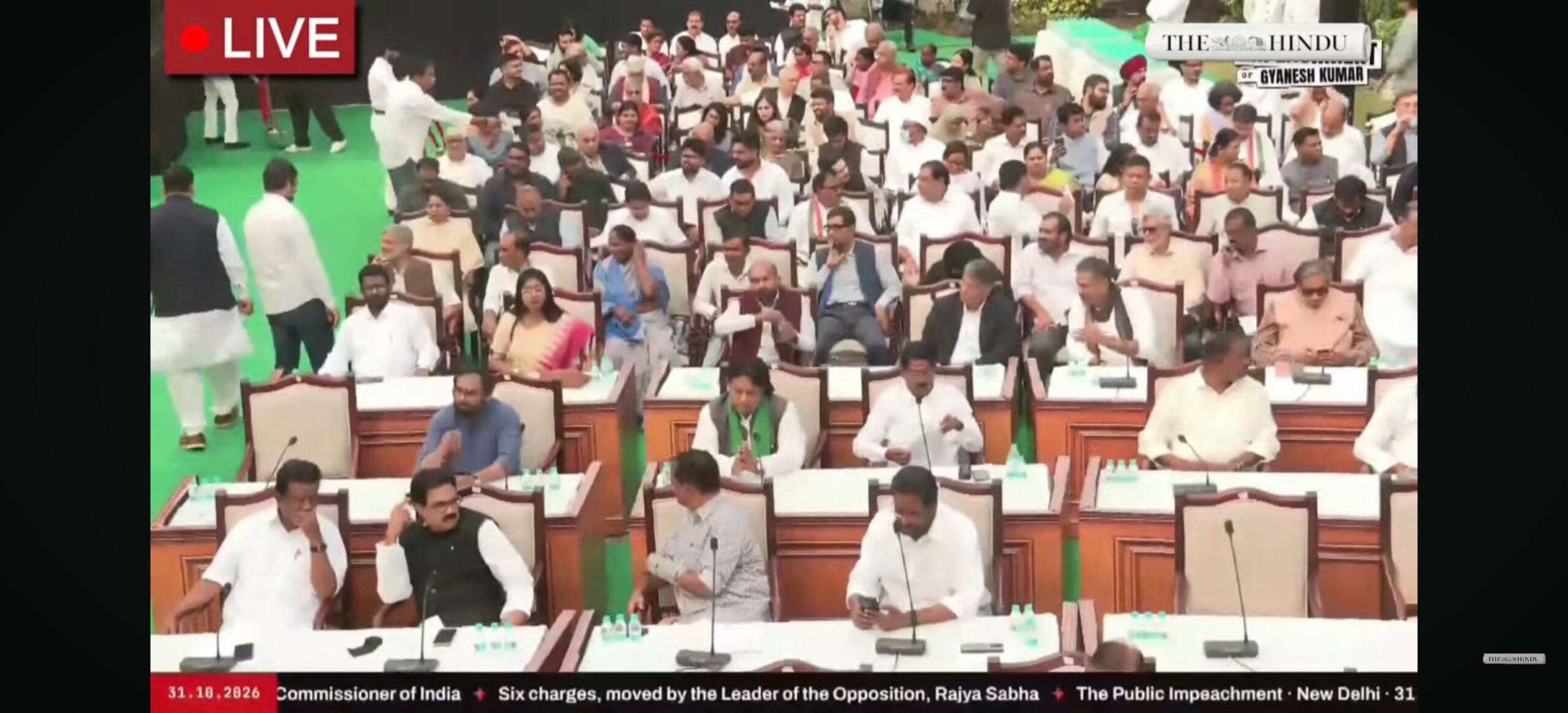
Former Lok Sabha Speaker Meira Kumar took the chair at Congress president Mallikarjun Kharge’s residence, 10 Rajaji Marg in New Delhi, on Saturday, 31 October, and opposition MPs did what Parliament has not let them do: argue the case for removing Chief Election Commissioner Gyanesh Kumar. Over three hours, Kharge moved a motion listing six charges, more than 30 MPs, activists and voters who said their names had been struck off spoke for it, and the INDIA bloc passed the resolution by a show of hands. It accuses the CEC of deleting about 13 crore voters through the Special Intensive Revision (SIR) of electoral rolls and calls it treason. The “public impeachment” has no legal force, and the opposition says that is the point: its formal notice to remove the CEC was rejected in April without reasons.
Meira Kumar: The Vote Is Under Attack
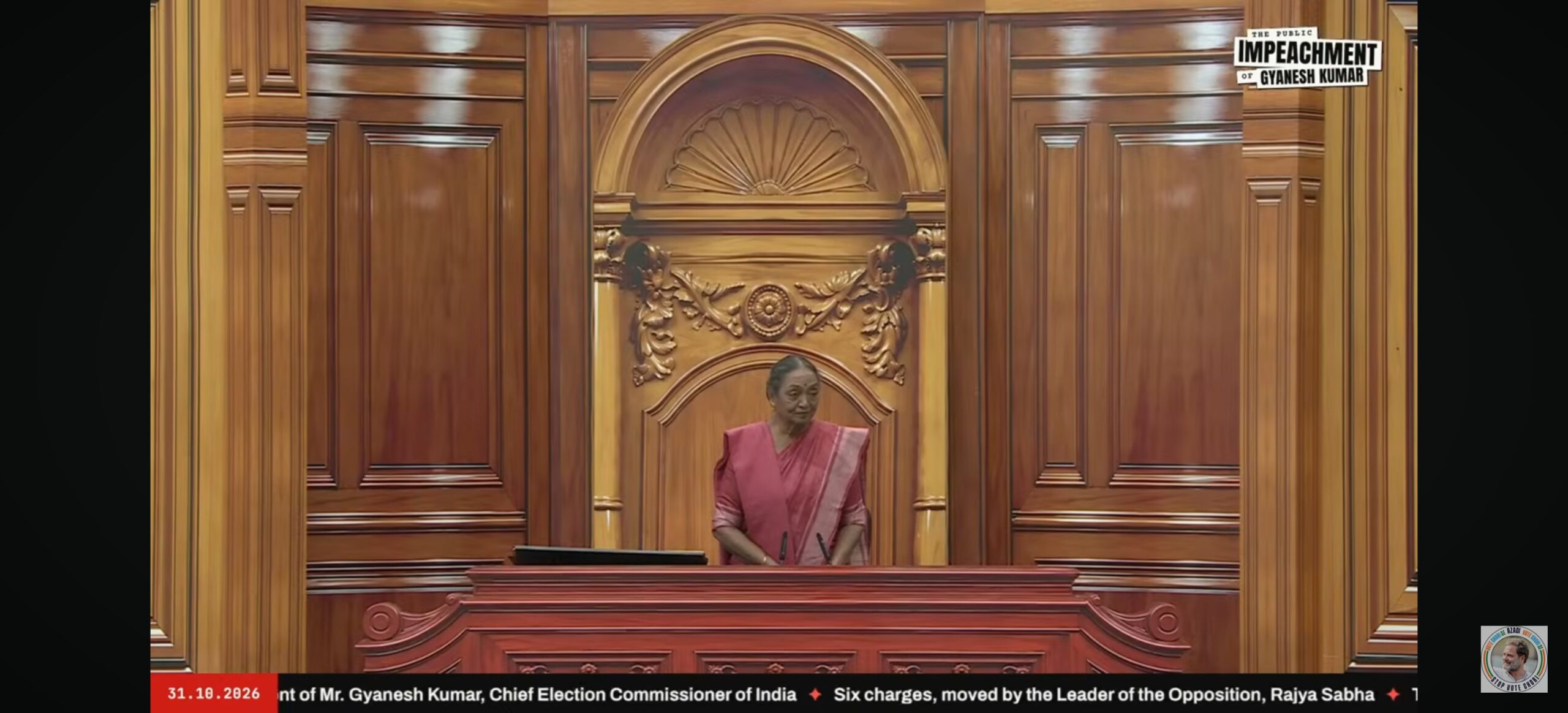
Meira Kumar presided, with Samajwadi Party MP Awadhesh Prasad and Trinamool Congress MP Saugata Roy as her deputies. The proceedings opened with the national anthem. “Today we have gathered because the very foundation of our democracy, the vote, is under attack,” she said in Hindi. “Voters’ names are being deleted unfairly and there is no transparency at all.”
She said the Constitution had given every adult one vote and made the rich and the poor equal at the ballot box, and that young voters “must not inherit a democracy that has been hollowed out”. She compared democracy to a banyan tree whose roots were being cut, and said those present had come ready to fight for it.
Also read UP SIR Form 7 Complaints: Supreme Court Tells EC to Act on Bulk Deletions
The Six Charges Kharge Read Out
Kharge, Leader of the Opposition in the Rajya Sabha, began with tributes to Sardar Vallabhbhai Patel on his 151st birth anniversary and to Indira Gandhi on the anniversary of her assassination. “The Chief Election Commissioner is running the Commission on the instructions of the Prime Minister and the Home Minister,” he said. “I have no personal enmity with him. This is about the institution.”
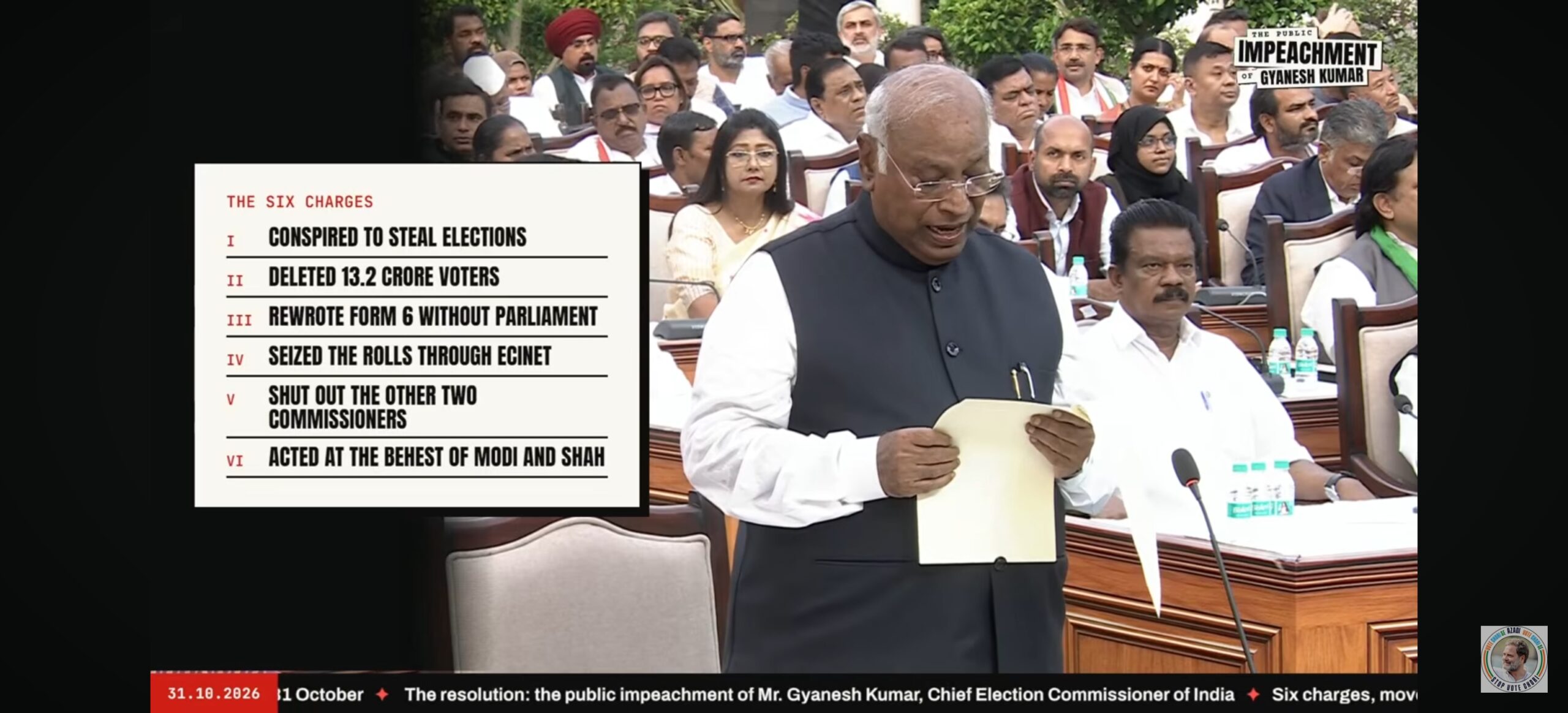
He then read the resolution in English. It says MPs “representing over 60% of the population” resolve to impeach the CEC on six charges:
One, being part of a criminal conspiracy orchestrated by the BJP to steal national and state elections, including giving access to electoral rolls to delete and add voters. Two, running a manipulated SIR that intentionally deleted about 13 crore voters. Three, illegally amending Form 6, the form a new voter fills in to register, under the Registration of Electors Rules, 1960, to keep first-time voters off the rolls. Four, illegally centralising control of the rolls through ECINET, the Commission’s digital platform, so that voters could be deleted and Electoral Registration Officers could not add them. Five, taking decisions with a small group of associates while excluding the other two Election Commissioners, and ignoring 14 objections raised in 10 days. Six, breaching the Commission’s independence: locking opposition parties out of hearings, the alleged disqualification of and assaults on opposition leaders, alleged postings and benefits for members of his family, and acting at the behest of Prime Minister Narendra Modi and Home Minister Amit Shah.
“Each of these is an act of treason,” the resolution says. It calls the legal protection given to Election Commissioners in December 2023 a cover, and says Kumar must be tried in court.
Kharge set out three demands: remove the CEC, repeal the 2023 law on the appointment of Election Commissioners, and stop the SIR. He said the 2023 law was passed after 145 opposition MPs were suspended and gives the CEC more legal protection than the President or the Chief Justice of India has. “First they stole MPs, broke parties, stole governments, brought electoral bonds, used the ED and CBI, and now it is vote chori,” he said. He also alleged that in Aland, Karnataka, the state CID wrote to the Election Commission 18 times for information and received no reply, and that protesters had faced detentions, internet shutdowns and stopped trains.
These are allegations made by opposition leaders. No court or inquiry has found the CEC guilty of any of them, and the resolution has no standing in law.
“I Am Alive, But They Have Marked Me Dead”
The most direct testimony came from voters who said their names had been deleted, introduced by Nikhil Dey of the Mazdoor Kisan Shakti Sangathan.
Anita Jaiswal, a daily-wage worker and single mother in Delhi, said she moved from Kolkata in 2003, has held a voter ID since 2012 and voted in every election until 2025, and found out at a cyber café that her name was gone. “I used this voter ID in court, for my daughter’s scholarship, at the bank and for Aadhaar. Who gave you the right to delete it?” she said. “Now they ask me to prove which country I belong to.” She said she would not fill in Form 6 again and wanted her name restored.
Kanta Prasad of Mangolpuri said: “I am alive and standing here, but they have marked me dead. I have voted for 35 years.” He said a booth-level officer had his son sign a paper, and the Chief Electoral Officer’s office later said the son had written that he had died. Maya Devi of Yamuna Khadar said her house was demolished and then her vote was cut, even though she holds a ration card, PAN card, Aadhaar and labour card. Kamal, from Bela Estate in Delhi, said 728 of the basti’s 729 voters were struck off on 1 October and marked “permanently shifted”, although their families appear on the 1961, 1975 and 2002 rolls.
Iftekhar Ahmed, from Chowringhee in Kolkata, said he had voted for 20 years and his father for 50, and that his name was dropped from the draft roll over a “mapping” problem even after he submitted his passport, driving licence, PAN, Aadhaar and education papers.
Bengal, Maharashtra, Uttar Pradesh: The State-by-State Case
MPs from the states brought their own figures. All are their claims.
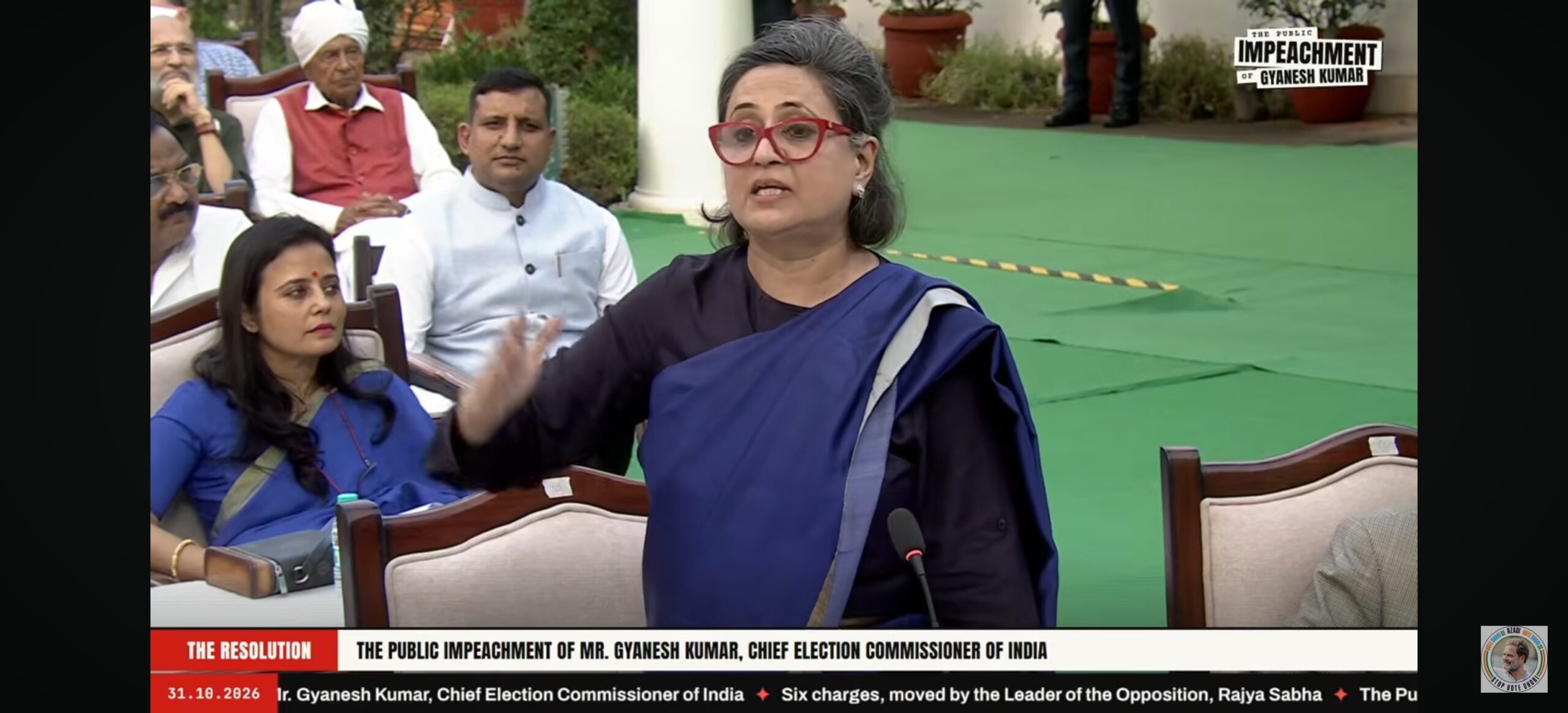
Trinamool Rajya Sabha MP Sagarika Ghose said the 2026 Bengal election “was stolen” by what she called the “Modi-Shah-Gyanesh Gathbandhan”, and that 27 lakh voters were deleted in Bengal as “logical discrepancy”. She said 91 to 93% of the appeals heard so far had been restored, which in her view showed the deletions were wrong, and that in half the seats the deletions were larger than the winning margin. She demanded fresh elections in Bengal and an independent audit of the SIR.
Lok Sabha MP Mahua Moitra said Bengal had 7.66 crore voters and 58 lakh were removed, that 71% of those deleted were Muslim and 51% women, and that “logical discrepancy” cases were concentrated in Murshidabad and Nadia. “A voter is a voice. When you delete a voter, you silence a voice,” she said. She called Kumar a puppet and Shah and Modi the puppeteers, and compared the exercise to Germany’s citizenship laws of 1935.
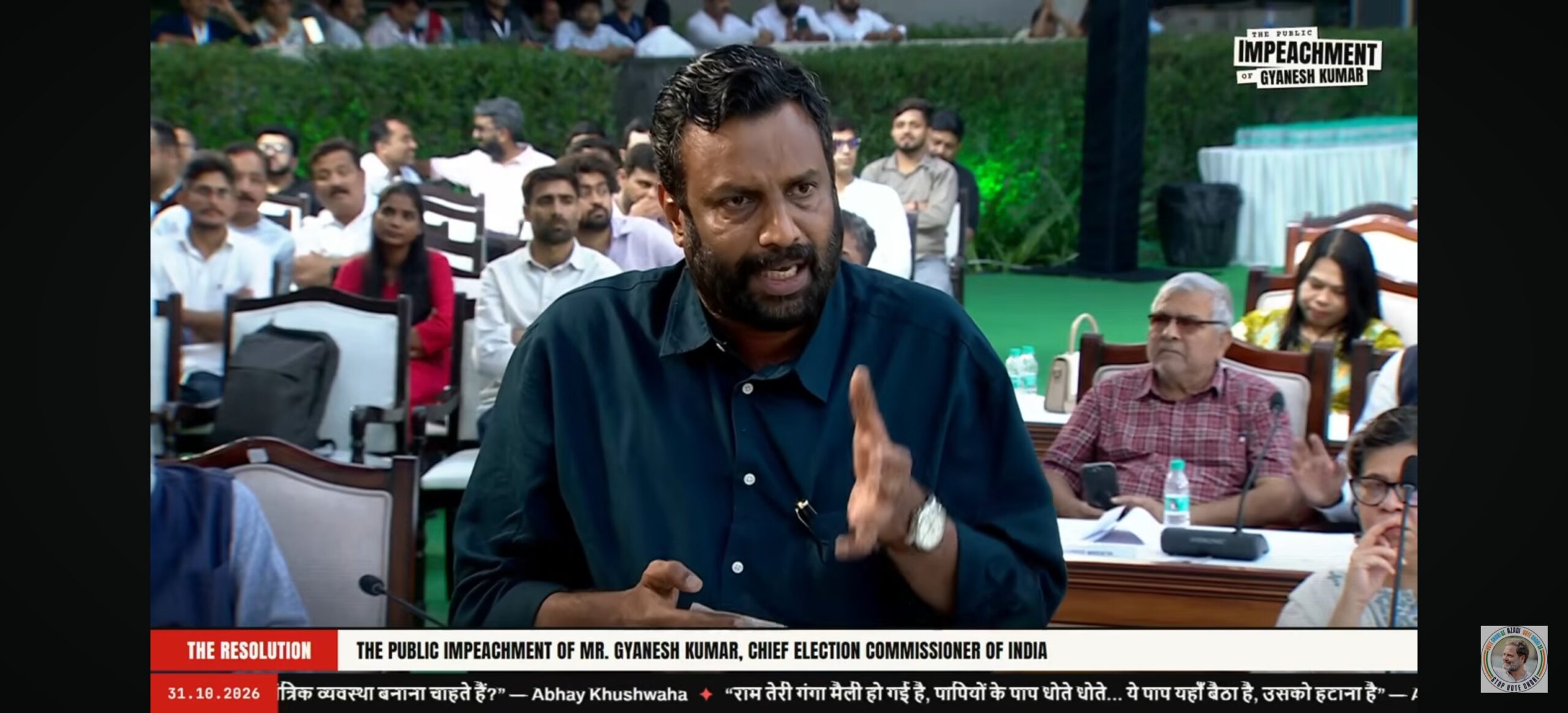
Shiv Sena (UBT) MP Arvind Sawant said 2 crore names had been deleted in the Maharashtra SIR, and repeated the opposition’s charge that 40 lakh votes came in after 5 pm in the 2024 Assembly election. NCP (Sharadchandra Pawar) MP Bajrang Manohar Sonawane spoke about Tuljapur and Markadwadi in Maharashtra. Samajwadi Party MP Harendra Singh Malik called the SIR “vote dakaiti” and alleged forged signatures on objection forms in Uttar Pradesh, citing 150 Form 7s in Sarojini Nagar signed by one man. RJD MP Abhay Kushwaha said 47 lakh names were cut in Bihar and asked how many had been added. Noor Sridhar of Eddelu Karnataka said the group’s check of 100 random booths suggested about 80 lakh genuine voters had been cut in Karnataka.
The Activists’ Numbers
Political scientist Yogendra Yadav said that by population projections, the adult population has risen to 103 crore while the roll has fallen to 88 crore, leaving what he called 15 crore “missing” voters. He said the gender ratio on the rolls had fallen from 953 to 939 women per 1,000 men, and that only about 10,600 foreigners had been found in six states, most of them from Nepal. He called Kumar “Mukhya Chunav Abhiyukt”, the chief election accused, rather than Mukhya Chunav Ayukt.
RTI activist Anjali Bhardwaj said she had asked for the file recording the decision to hold a nationwide SIR and been told there was none. “Who decided: the PMO or the Home Ministry?” she asked. Advocate Shahrukh Alam said that as an Indian Muslim, the SIR had been “an assault on my dignity”.
“Vanish Kumar”, “Puppet”, “Henchman”: The Attacks on Kumar
Several speakers went after Kumar personally. Sagarika Ghose said he “should be called Mr Vanish Kumar”, called him “the 12th man of the BJP”, and said that when a Trinamool delegation met him, he told them to “get lost” after seven minutes. MDMK MP Durai Vaiko repeated the “Vanish Kumar” name and called the SIR “match fixing in elections”. Mahua Moitra called him a puppet, and a PDP speaker called him a henchman. Samajwadi Party MP Rajeev Rai said “Gyanesh Kumar’s place is in jail”, and CPI(ML) Liberation MP Sudama Prasad said he should be removed, arrested and charged with sedition.
CPI(M) MP John Brittas brought Kumar’s daughter into it, alleging that she was involved in detaining workers in Noida. Kumar’s daughter, Medha Roopam, is the District Magistrate of Gautam Buddha Nagar (Noida). In September, the Allahabad High Court quashed a National Security Act detention order she had passed against Akriti Chaudhary, a Delhi University graduate arrested after a Noida workers’ protest in April, criticised her conduct and ordered ₹5 lakh compensation to be recovered from the officers responsible, ED Times reported. The Supreme Court later stayed the High Court’s remarks against Roopam and the compensation direction, after the Solicitor General argued she had not been heard first; the quashing of the detention stands.
Another speaker, who said it was his maiden speech, alleged that in 2006, when Kumar was Kerala’s Public Works Department Secretary, his corruption led to the suicide of a foreign engineer working on a road project, and that a vigilance case had been started. That case is on the record. Kerala Home Minister Ramesh Chennithala on 4 October ordered the state Vigilance and Anti-Corruption Bureau to hold a preliminary inquiry into the 2006 death of Lee See Been, a Malaysian engineer on the World Bank-funded MC Road project, whose reported notes named Kumar, The Tribune reported. The allegations, which include demands for money to clear bills, are unproven, and the original inquiry stalled after a change of government in 2006. The Tribune reported no response from Kumar. Speaking at the event, the speaker demanded that Kumar’s legal immunity be removed.
Rahul Gandhi: Every Institutional Route Has Been Closed
Rahul Gandhi, Leader of the Opposition in the Lok Sabha, spoke last. “People ask why we are meeting in a garden. Because every institutional route has been closed to us,” he said. He put the deletions at 13.3 crore, one in seven voters, against what he said was a 3% margin in 2024, and argued that “by the Election Commission’s own logic, the 2024 Lok Sabha election is illegal”. That is his reading; the Commission has made no such finding, and no court has been asked to set aside the 2024 result on this ground.
“There is enough proof that he cannot survive as CEC,” Gandhi said. “You cannot hide behind the institution.” He added: “I am not saying this out of nastiness. I am optimistic. This is a test of the Union of India.” He also backed a trial for treason.
Among others who spoke were CPI(M) MP John Brittas, CPI MP P Santosh Kumar, CPI(ML) Liberation MP Sudama Prasad, Kerala Congress (M) MP Jose K Mani, RSP MP N K Premachandran, MDMK MP Durai Vaiko, Samajwadi Party MP Rajeev Rai, student activist Neha Bora and Rajya Sabha MP Kapil Sibal. “This will not end with Gyanesh Kumar. It will start with him,” Sibal said.
The resolution was then put to a show of hands and declared passed. Closing the session, Meira Kumar said that in her long career, including five years as Speaker, she had never seen such a gathering: “There was not a single voice of dissent.” The event ended with the national anthem.
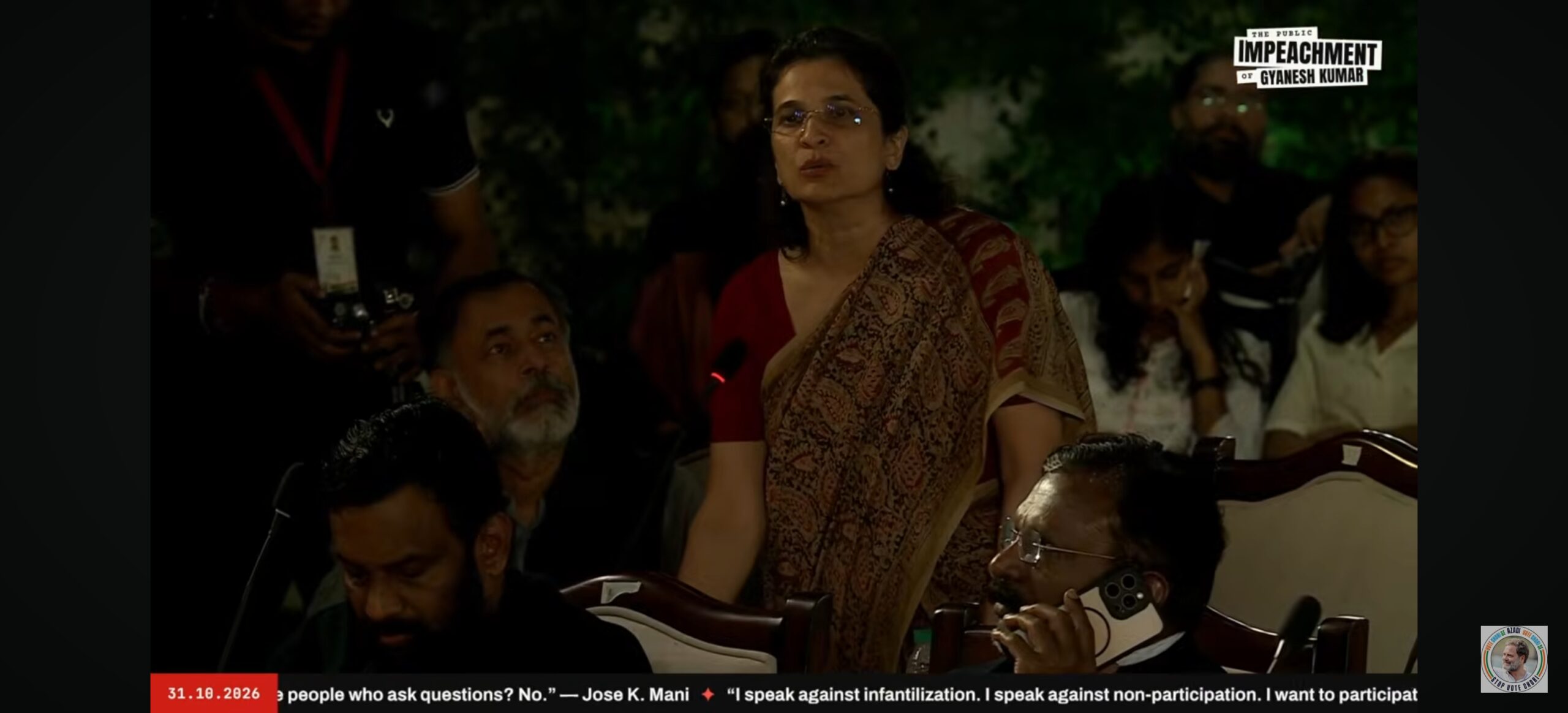
Who Came to Rajaji Marg
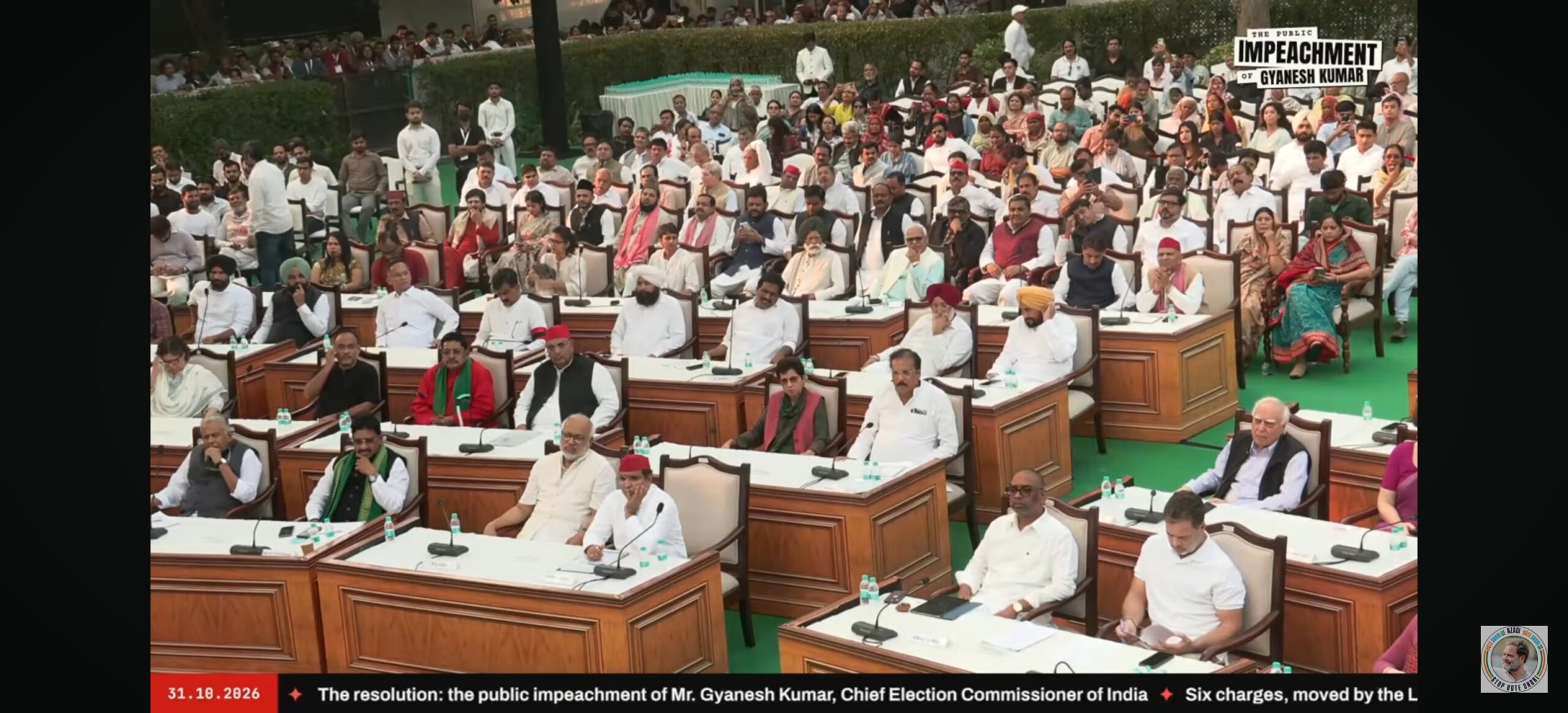
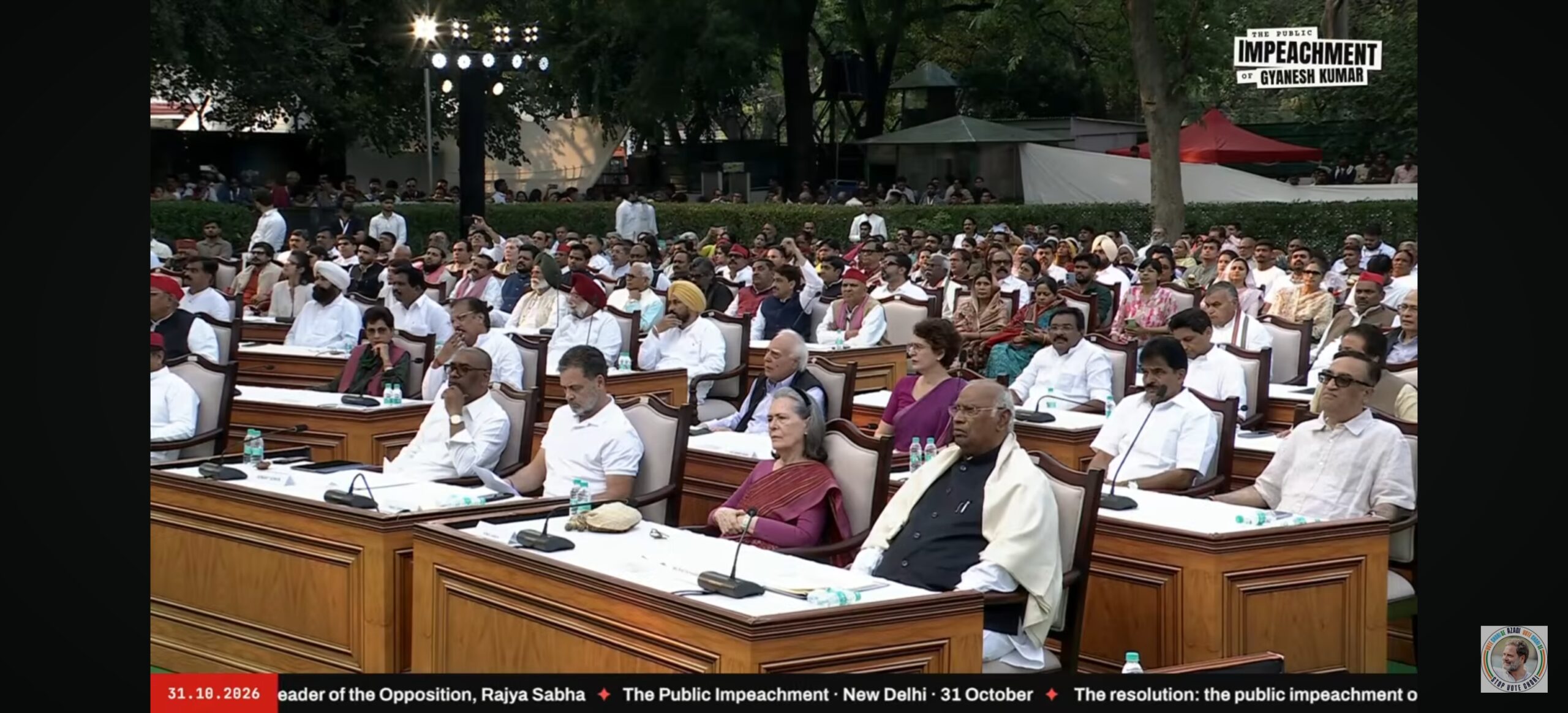
The Congress turned out its senior leadership: Sonia Gandhi, Priyanka Gandhi Vadra, K C Venugopal, Kumari Selja, Ajay Maken, Shashi Tharoor, Abhishek Singhvi, Gaurav Gogoi, Manish Tewari, Pawan Khera, Deepender Hooda, Charanjit Singh Channi and Punjab Congress chief Amarinder Singh Raja Warring, among others, The Tribune reported. From the allies came Jharkhand Chief Minister Hemant Soren, PDP chief Mehbooba Mufti, and MPs from the Trinamool Congress, Samajwadi Party, JMM, RJD, NCP (Sharadchandra Pawar), Shiv Sena (UBT), the Left parties and others. Twenty-one INDIA bloc parties had planned the event, according to a PTI report carried by The Federal.
From Ashok Hotel to a Leader’s Home
The opposition did not intend to hold its House in a private residence. Congress general secretary K C Venugopal said on 27 October that the government-run Ashok Hotel had first agreed to host the session and then backed out after police intervened, and that workers putting up structures at Ramlila Maidan had been stopped. He said the decision came from Modi and Shah.
The bloc then moved the event to Kharge’s official residence for 3:30 pm on Friday, 30 October. Rain forced one more change. Rahul Gandhi told reporters the parties had agreed by consensus to shift it by a day so senior leaders would not have to sit in the downpour. Congress MP Pawan Khera put the bloc’s framing plainly before it began: “This is not a mock parliament; it is a public impeachment of Gyanesh Kumar,” ETV Bharat reported.
Why the Opposition Built Its Own House
The mock session is a response to a dead end in the real one. On 12 March, 193 opposition MPs, 130 in the Lok Sabha and 63 in the Rajya Sabha, gave notices to remove the CEC, the first time such notices were moved in both Houses. On 6 April, Lok Sabha Speaker Om Birla and Rajya Sabha Chairman C P Radhakrishnan refused to admit them under section 3 of the Judges (Inquiry) Act, 1968. Their bulletins referred only to a “careful and objective assessment” and gave no reasons, The Wire reported.
The law makes removal hard by design. The 2023 Act on the appointment and service of Election Commissioners says a CEC can be removed only in the same manner and on the same grounds as a Supreme Court judge. That means a notice signed by at least 100 Lok Sabha or 50 Rajya Sabha members, admission by the presiding officer, an inquiry by a three-member committee, and then a vote in each House by a majority of its total membership and two-thirds of those present and voting. The opposition cleared the first step on signatures and was stopped at the second. Without admission, the charges were never examined by any committee.
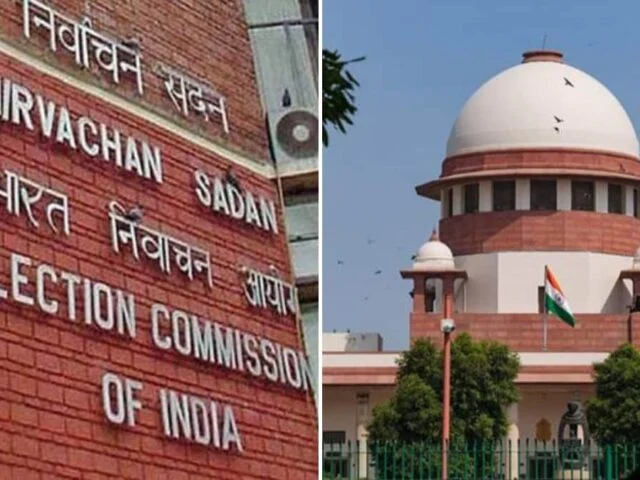
The deletion figures used on Saturday, 13.2 crore from Kharge and 13.3 crore from Gandhi, sit close to the Election Commission’s own draft-roll data. IPB’s state-wise count found over 13 crore names cut from draft rolls across three phases, with Maharashtra losing the most names and Delhi the highest share. Some of the charges overlap with matters before the Supreme Court, where the Commission has filed an affidavit on the SIR, the CEC’s role and Form 6, which IPB has explained in detail. The court has listed a Maharashtra plea on deletions for 5 November.
What Remains Unanswered
Kharge’s central demand was for data that the Commission has not put out in full: how many of the deleted voters were dead, how many had moved, and the names of those removed, state by state. Bhardwaj’s question about who took the decision on a nationwide SIR has no public answer. Gandhi said the opposition holds evidence that will end Kumar’s tenure but did not set out what it is or when it will be released. And the 6 April rejection of the removal notices still has no stated reasons.
Ramlila Maidan on 1 November
The mock session was billed as the curtain raiser. The INDIA bloc’s “Delhi Chalo” march ends in a rally at Ramlila Maidan on Sunday, 1 November, demanding the CEC’s resignation over alleged “vote chori” in the SIR. Venugopal has said the Congress expects at least 10 lakh people, The Federal reported, and Neha Bora appealed from the stage for everyone to attend. IPB’s earlier coverage of protests over the SIR includes the 23 October People’s March and the NSUI march seeking the CEC’s resignation.
Source: Live stream of “The Public Impeachment of CEC Gyanesh Kumar”, 10 Rajaji Marg, New Delhi, 31 October 2026 (speeches in Hindi translated by IPB); All India Radio report on the rejection of the removal notices, 6 April 2026. Also based on reporting by The Tribune, India TV, The Daily Jagran, ETV Bharat, The Federal (PTI), The Week, The Wire, ED Times and The Tribune (Kerala vigilance probe).
Image: Preparations outside Mallikarjun Kharge’s residence, New Delhi / PTI via ETV Bharat. Photographs in the story: event live stream.
How the SIR story developed
- INDIA Bloc Rally at Ramlila Maidan on 1 Nov: Route, Timings, Curbs
- INDIA Bloc Mock Parliament: The Six Charges Against CEC Gyanesh KumarYou are reading
- UP SIR Form 7 Complaints: Supreme Court Tells EC to Act on Bulk Deletions
- SIR Deadlines Extended in Maharashtra, Delhi and 4 Other States
- EC Affidavit in Supreme Court: What It Says on SIR, CEC and Form 6
- Maharashtra SIR: Supreme Court Seeks EC Reply on 3 Crore Deletions
- SIR Software Name Withheld: EC Cites Trade Secrets in RTI Reply
- SIR Voter List: Over 13 Crore Names Cut From Draft Rolls
Get IPB News first