UPI Charges After Diwali: Who Pays the 0.4% Fee and Who Stays Free
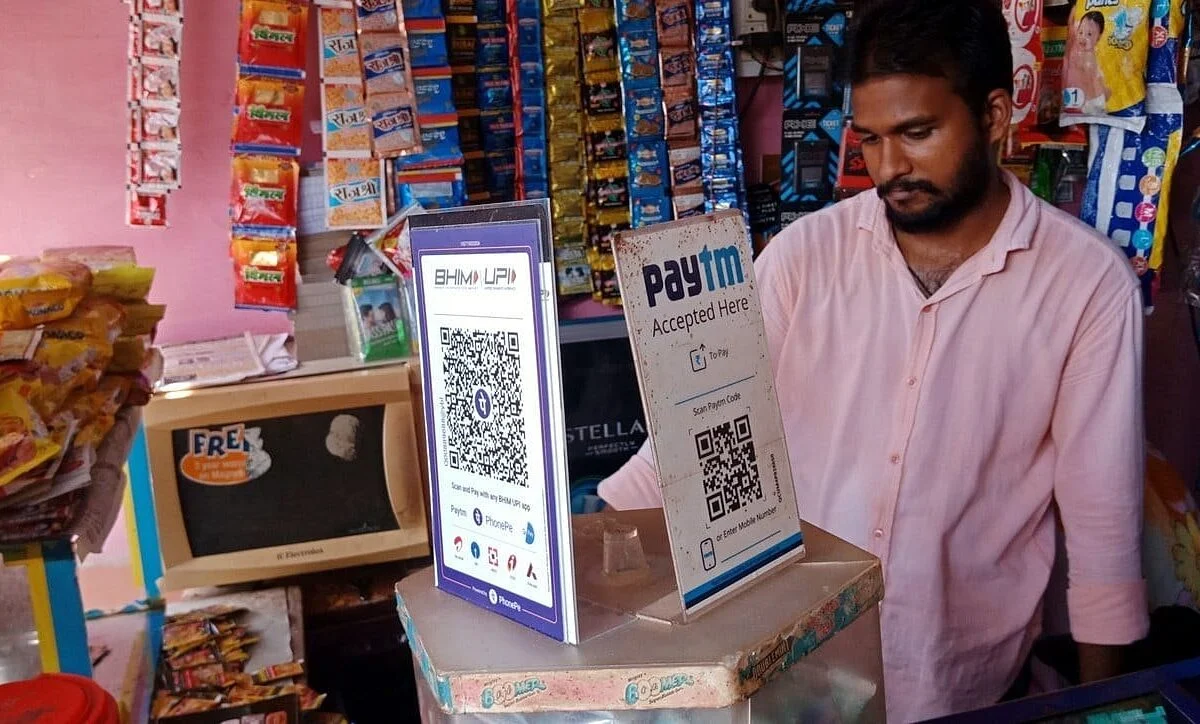
Image: iStock / Deccan Herald
The Fee Falls on Shops, Not on You
- A 0.4% Merchant Discount Rate (MDR) will apply to UPI payments above ₹2,000 made to merchants, capped at ₹300 a payment. It was due on 15 October; NPCI moved it to a date after Diwali that it has not yet announced.
- Customers pay nothing extra. Merchants are not allowed to add the fee to the bill, and UPI apps cannot charge a platform fee.
- Payments of ₹2,000 or less stay free, and so do small shops that receive up to ₹1 lakh a month through UPI QR codes. Money sent to family and friends stays free at any amount.
- The government says the fee is needed to pay for running UPI; opposition parties and traders have called it a “Modi Tax”.
A customer who pays ₹3,000 for a pair of shoes by scanning a UPI QR code will not pay a rupee more after Diwali. The shop will. Under a framework issued by the National Payments Corporation of India (NPCI) on 15 September, the shopkeeper’s bank will keep ₹12 of that payment as a Merchant Discount Rate. The new UPI MDR charges, 0.4% on merchant payments above ₹2,000, were to begin on 15 October. Two days before that, NPCI said the UPI and Services Steering Committee had decided, “keeping in mind the festive season”, to start them immediately after Diwali, on a date still to be notified.
It is the first charge of any kind on UPI since January 2020, when the government made UPI and RuPay debit card payments free for merchants by law. For most of the country’s daily payments, nothing changes. For shops, petrol pumps, hospitals and online sellers that take larger payments, it is a new cost. Below: what a shop will pay, who is exempt, why the government says free UPI could not last, where the money goes, and what NPCI has still not explained.
What a Shop Pays on a ₹3,000 Bill
NPCI’s own examples show how the fee works. A ₹2,000 payment carries no MDR. A ₹3,000 payment costs the merchant ₹12, and a ₹50,000 payment costs ₹200. From ₹75,000 upwards the fee stops rising at ₹300, so a ₹1 lakh payment for a laptop or a hospital bill also costs the merchant ₹300, not ₹400.
Also read Banks to Hold Financial Inclusion Camps in Panchayats From Oct 21
Some kinds of payment get a lower rate. Railways, telecom services, insurance and fuel carry a flat ₹5 a payment above ₹2,000, so a ₹10,000 insurance premium costs the insurer ₹5 instead of ₹40. Schools, colleges, universities and exam bodies get concessional or capped rates. Payments to mutual funds, stockbrokers and investment platforms carry 0.02%, also capped at ₹300. UPI AutoPay mandates for bills, OTT subscriptions and recurring investments carry no prescribed MDR. Credit-linked UPI payments, such as RuPay credit cards on UPI, are outside this framework and stay under the existing card rules.
For comparison, debit card MDR is capped at 0.90% and credit card MDR usually runs between 1.5% and 2.5%, according to NPCI’s FAQ. A shop that already takes cards will find UPI the cheaper option even after the change.
The ₹1 Lakh Line for Small Shops
The tea stall, the vegetable vendor and the small kirana are protected twice. First, most of their payments are below ₹2,000, and such payments make up more than 95% of UPI merchant transactions by volume, NPCI says. Second, even a payment above ₹2,000 attracts no fee if the shop falls in the person-to-person-merchant (P2PM) category, which covers small merchants receiving up to ₹1 lakh a month through UPI QR codes. A shop does not need GST registration to qualify, and existing QR codes keep working.
The line has an edge. A merchant whose UPI receipts cross ₹1 lakh in three consecutive months can be moved into the regular merchant category, where the 0.4% applies to every payment above ₹2,000. That catches shops that are busy but far from large: a pharmacy or a hardware store taking ₹1.2 lakh a month on UPI has a turnover of around ₹14 lakh a year. One month above the line does not, by itself, trigger the move.
Why Free UPI Is Ending
Since January 2020, Section 10A of the Payment and Settlement Systems Act has barred banks and payment companies from charging merchants for UPI and RuPay debit card payments. To keep them going, the Centre paid banks through a yearly incentive scheme. Parliament’s Standing Committee on Finance, in its 32nd report, said that support came to roughly ₹2,000 crore a year and warned that the zero-MDR regime “puts pressure on government finances”. The Department of Financial Services told the committee that the incentive covered only 11% of the cost the industry bears, and that the absence of MDR makes the UPI system financially unsustainable.
The scale explains the cost. In August 2026 alone, UPI handled 2,451 crore transactions worth ₹29.9 lakh crore. On 4 August, the Finance Minister introduced the Taxation and Other Laws (Amendment) Bill, 2026, which replaces the blanket ban in Section 10A with a power for the government to decide by notification which payments stay free. On 14 September a notification kept UPI and RuPay payments up to ₹2,000 free. NPCI’s circular, numbered NPCI/UPI/OC-No.237/2026-27, followed the next day.
Where the ₹40 on a ₹10,000 Payment Goes
The fee does not go to the government or to NPCI. The finance ministry said MDR “is a charge within the merchant payment ecosystem”, shared among the banks, payment companies and UPI apps that process the payment. Moneycontrol, reading the NPCI circular, reported a split of 40% to the customer’s bank, 30% to the merchant’s bank, 20% to the UPI app and 10% to the app’s partner bank. On a ₹10,000 payment, that is ₹16, ₹12, ₹8 and ₹4. Payment aggregators get no set share. Paytm told the stock exchanges the circular would bring it revenue from payments that were free earlier.
Part of the money is meant to come back to small merchants. NPCI’s FAQ proposes a dedicated fund to help banks and payment aggregators bring small merchants onto UPI, especially in smaller towns, the North-East, Jammu and Kashmir and Ladakh. Its rules are to be settled with the Reserve Bank of India within three months of the 15 September announcement. The FAQ does not say how much of the MDR will go into it.
‘Modi Tax’ and the US Question
Traders, shopkeepers and opposition parties have called the fee a “Modi Tax”, PTI reported. Congress leaders accused Prime Minister Narendra Modi of giving in to US pressure. Congress general secretary Jairam Ramesh asked, “Is this being done to enable US card companies to compete with UPI?” and alleged that the government had accepted a US demand to end zero MDR. No document has been made public showing such a demand. The question comes while India and the US are still negotiating a trade deal.
The government rejected the claim of foreign influence. Officials said the decision was taken to make UPI self-sustaining and to pay for its safety and security, and that individuals will keep “unlimited free usage, with no monthly quotas”. The ministry has repeated that MDR is not a tax and is not collected by the government.
‘No Question’ of a Rethink, Then a Delay
On 16 September, a day after the circular, a top official told PTI there was no question of reversing the decision to start the fee on 15 October. Four weeks later the start date was gone. Merchant bodies had asked for a postponement, saying the fee could hurt festive sales, Deccan Herald reported; traders welcomed the delay, and the Congress described it as a policy reversal. The fee itself has not been withdrawn: only the date has moved, and NPCI said the charge will begin immediately after Diwali.
Questions NPCI Has Not Answered
NPCI has not named the new start date. Outlook Money reported that the charges are expected in the second week of November. NPCI’s deferral statement also does not say whether the framework will change, whether any more merchant categories will be exempted, or whether merchants will be allowed to pass the charge on to customers, The Week noted. The FAQ says they may not; it does not say how a customer can complain if a shop adds a UPI surcharge, or who will check.
The rules for the small-merchant fund are due by mid-December. Until then, a customer’s position is simple: paying by UPI costs nothing, and any shop that asks for extra for a UPI payment is going against NPCI’s rules. More money explainers are on our Economy page, and the RBI’s latest thinking on interest rates is in our report on the MPC minutes.
Frequently Asked Questions
Will I be charged for paying by UPI after Diwali?
No. The 0.4% MDR is paid by the merchant, not the customer. Merchants are not allowed to add it to your bill, and UPI apps cannot charge a platform fee.
Which UPI payments attract MDR?
Payments above ₹2,000 made to merchants, at 0.4% with a cap of ₹300 per payment. Railways, telecom, insurance and fuel pay a flat ₹5. Payments of ₹2,000 or less, and all transfers between individuals, stay free.
Are small shopkeepers exempt from UPI MDR?
Yes, if they receive up to ₹1 lakh a month through UPI QR codes. A shop whose UPI receipts stay above ₹1 lakh for three months in a row can be moved into the regular category, where the fee applies.
When do UPI MDR charges start?
NPCI has said only that they will start immediately after Diwali, on a date to be notified. They were originally due on 15 October 2026.
Source: NPCI FAQs on MDR on select UPI P2M transactions, 15 September 2026; Paytm stock exchange disclosure on NPCI circular OC-No.237/2026-27. Also based on reporting by PTI / ThePrint, PTI / Millennium Post, Deccan Herald, The Week, SCC Times, Business Today, The Hans India, MediaNama, Takshashila Institution, FintechSpecs (citing Moneycontrol), Brut and Outlook Money.
Image: iStock / Deccan Herald.