Delhi Air Pollution Lab AATAL Opens at IITM to Trace Sources
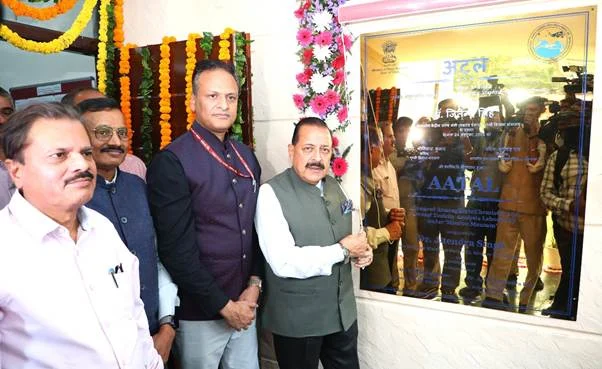
Image: PIB
Union Minister of State Jitendra Singh has opened a new laboratory at the Delhi branch of the Indian Institute of Tropical Meteorology (IITM) that will break down Delhi-NCR’s air pollution by what it contains and where it comes from, according to a Press Information Bureau release dated 24 October. The Integrated Atmospheric Chemistry and Aerosol Toxicity Analysis Laboratory, or AATAL, uses advanced instruments to analyse gases and fine particles, and the government calls it the first facility of its kind in the world.
Beyond the AQI Number
Until now, the daily debate in Delhi has mostly been about whether the air index reads 100 or 200, the minister said, as quoted in the release. The lab is meant to show what is in that air: PM2.5, metals and toxic elements, and how much of it comes from vehicles, industry, crop-residue and biomass burning, construction and road dust, or pollution carried in from elsewhere. The release says it will also look at possible health effects.
During a demonstration, Singh said transport was contributing about 25 per cent of pollution at that moment, when the overall level was around 180.
Also read Delhi Rain Likely Oct 24-25 as Western Disturbance Arrives; AQI 222
Forecasts at 400-Metre Resolution
The lab feeds into IITM’s AIRWISE decision-support system, which combines forecasts, observations and source data. Singh said the system gives air-quality forecasts at 400-metre resolution for the next 72 hours, along with real-time information and a four-day outlook. The release names the Commission for Air Quality Management, pollution control agencies, health agencies and disaster management bodies among the users of the data, alongside the India Meteorological Department and the environment ministry.
Part of Mission Mausam
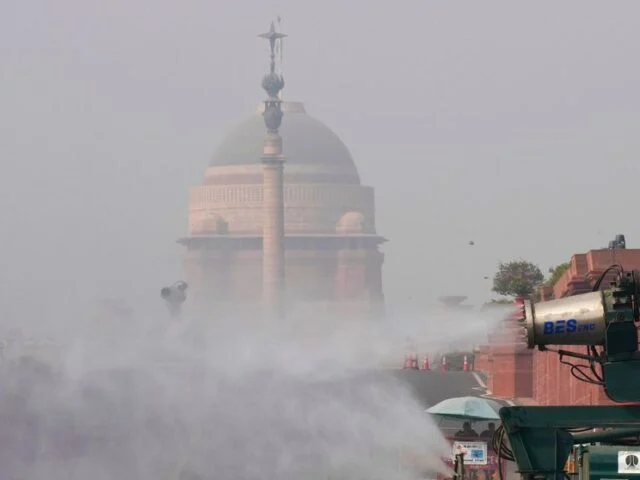
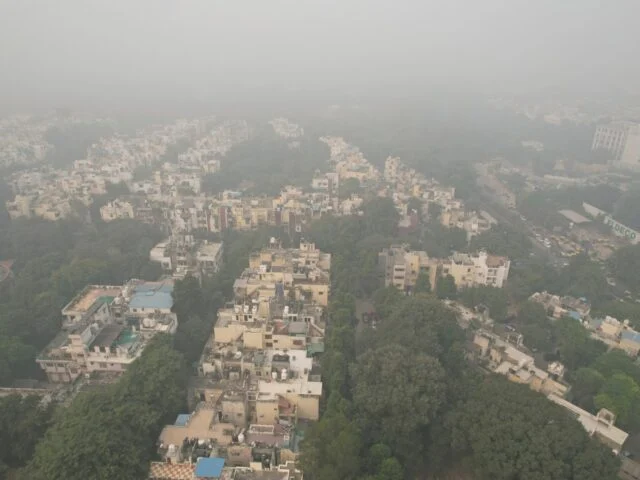
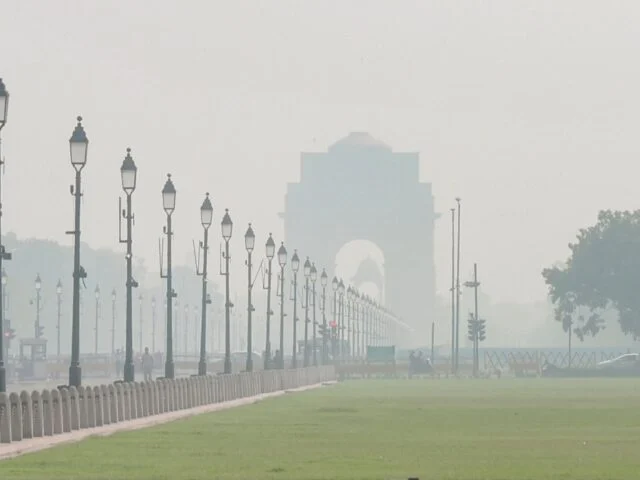
The facility has been set up under the Prime Minister’s Mission Mausam. Also present were Earth Sciences Secretary T. Srinivas Kumar, IITM Director A. Surya Chandra Rao and IMD Director General Mahapatra. The launch comes as Delhi’s air has been in the poor range this month; IPB has tracked it in its reports on Thursday’s AQI of 223 and the imposition of GRAP stage 1, and explained why stubble burning keeps coming back.
The release does not say when the lab’s first source-apportionment results will be published, or whether CAQM will use them in its GRAP decisions this winter.
Source: PIB release, Ministry of Earth Sciences (24 October 2026).
Image: PIB.