Iran’s Hormuz Exemption for India: Who Pays, and Who Takes the Risk
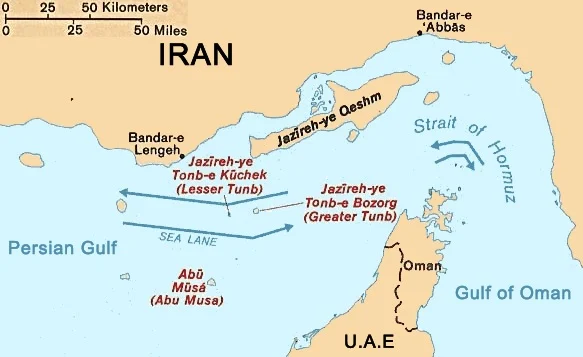
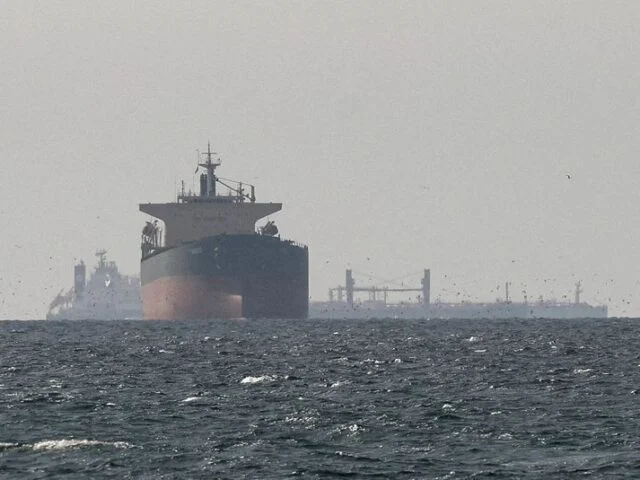
The Strait of Hormuz (file photo) / NASA via Wikimedia Commons
Free Passage, With a Bill Attached
- A senior Iranian lawmaker said on 3 November that ships from India, China, Iraq and Qatar are exempt from Iran’s Strait of Hormuz restrictions. He also said Indian and Chinese ships pay Iran a transit fee; Qatari ships do not.
- He linked India’s exemption to Iran’s need for Indian medicines. New Delhi has not commented on the exemption or on the fee claim.
- Since May, the US Treasury has warned that non-US companies paying Iranian government bodies for safe passage risk sanctions exposure.
- The External Affairs Ministry says 23 Indians, 15 of them seafarers, have died in the West Asia conflict. A seafarers’ union estimates more than 4,000 Indian sailors are serving on ships in the region.
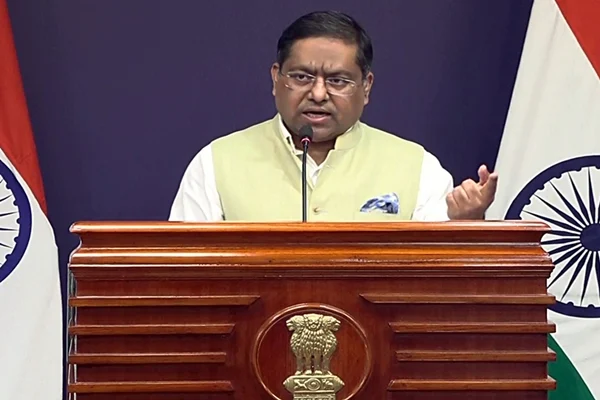
On Tuesday, 3 November, Amir Hayat Moghaddam, deputy chairman of the Iranian parliament’s National Security and Foreign Policy Committee, told the Iranian Students’ News Agency that ships from four countries, India among them, now cross the Strait of Hormuz freely and that American forces do not stop them either. In the same interview he said the Indian and Chinese ships pay Iran a fee to do so. The announcement was reported in India as a relief for fuel supplies. It is also a claim that India’s government has neither confirmed nor denied, and one that, if true, puts Indian shipowners in a difficult spot with Washington.
Below: what Iran has actually said, why the fee matters, what has happened to Indian sailors in these waters, and the questions New Delhi has not answered.
What Iran Said, and What It Left Out
Iran effectively shut the strait soon after the United States and Israel attacked it on 28 February, letting through only ships it chose. Within weeks it was allowing some vessels from friendly countries, and in April its military command named Iraq as exempt. The US reimposed a naval blockade on Iran’s southern ports in July.
Also read Sensex Ends 126 Points Lower at 73,124; Smallcaps Fall 3%
Hayat Moghaddam’s statement is the first time a senior Iranian figure has put India on a formal list. He said the exemptions rest on Iran’s interests and “mutual” ones: medicine imports from India, and political support from China. Qatar, which is mediating between Tehran and Washington, gets free passage. He did not say how much the fee is, how it is collected, who pays it, or whether “Indian ships” means ships flying the Indian flag, owned by Indian firms, or carrying cargo to India. Security analyst Wolfgang Pusztai told Al Jazeera that this last point is unclear, and that it matters, because most ships carrying Indian oil fly foreign flags.
Nor has the US said it accepts the arrangement. US Central Command’s position is that its blockade covers all vessels entering or leaving Iranian ports, and does not touch ships that avoid them. Pusztai said whether Iran’s move works will depend on how Washington responds.
Why the Fee Is the Real Story
On 1 May, the US Treasury’s Office of Foreign Assets Control said Americans are generally barred from paying Iranian government bodies for safe passage, and that non-US companies that make such payments may be exposed to sanctions. Many Indian shipping and oil companies have US banking, insurance and trade links that they cannot afford to lose.
This is not the first time the question has come up. In April, Iran’s ambassador to India, Mohammad Fathali, said the Indian tankers that had crossed until then had paid no tolls, and New Delhi denied paying for the passage of nine LPG carriers, Maritime Gateway reported. Iran’s lawmaker is now saying the opposite: that Indian ships pay. Either the payment arrangement has changed since April, or one of the two Iranian accounts is wrong. The Indian government has not said which.
If Indian ships are paying, the government has to explain who is paying, under what arrangement, and how it squares with US sanctions. If they are not, it has to say so, because an Iranian official’s public claim otherwise is the kind of statement that invites scrutiny of Indian firms. So far there has been neither a confirmation nor a denial from the External Affairs Ministry, the Shipping Ministry or the Petroleum Ministry.
How Much India Depends on This Strait
Before the war, about 45% of India’s crude oil imports and nearly 90% of its imported LPG came through Hormuz, according to Petroleum Ministry figures cited by India Blooms. Much of India’s LNG also comes from Qatar through the same route. In October, about 10.23 million barrels a day of Gulf crude moved through the strait, and about 13% of it went to India, according to ship-tracking firm Kpler, as reported by Al Jazeera. China took about 42%.
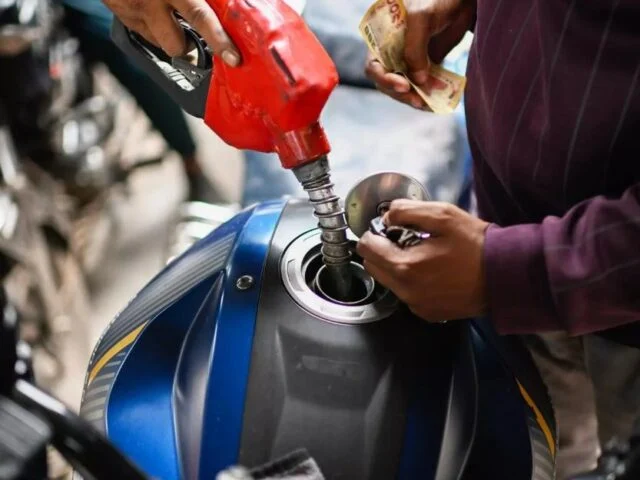
That dependence is why pump prices have been a political issue all year. IPB’s breakdown of the ₹102 litre of petrol in Delhi shows how crude prices driven by this conflict feed into what Indians pay, and how state-run oil companies have been carrying losses since crude jumped.
Markets did not treat the exemption as a big change. Chris Beauchamp of IG Group told Al Jazeera that it makes only a limited difference for now, since traders are watching for a wider peace deal.
The Sailors Who Carry the Risk
An exemption on paper has not made these waters safe. More than 120 commercial ships have been hit in the region since the war began, and October was the worst month, according to International Maritime Organization and UKMTO data cited by Al Jazeera. On 30 October, a Qatari LNG carrier, Al Mayeda, was struck by “unidentified objects” in the Gulf, even though Qatar is one of the four exempted countries.
Indians have paid heavily. On 3 November the External Affairs Ministry put the number of Indians killed in the conflict at 23, including 15 seafarers. The most recent was a sailor killed when the vessel MSV Al Jusufi was attacked off Limah, Oman; 13 others were rescued. A week earlier the toll stood at 22, with 14 seafarers among them.
In July, the Directorate General of Maritime Administration issued Circular No. 36 of 2026, asking ship owners, managers and manning agencies not to deploy Indian seafarers on ships crossing Hormuz until further notice. It is an advisory, not a ban, and there is no public record of any action against a company that ignored it. The Forward Seamen’s Union of India estimates more than 4,000 Indian sailors are working on ships in the region. For many of them, refusing a voyage means losing a contract.
That raises a question the exemption makes sharper. If Iran is now telling the world that Indian ships pass safely, do shipowners treat the DGMA advisory as outdated? The government has not said whether the advisory still stands in light of Iran’s statement.
What New Delhi Has and Has Not Said
India’s public position throughout the war has been general. It has called attacks on commercial shipping “deeply concerning”, asked for an end to strikes on civilian vessels and infrastructure, and called for free navigation in international waters under international law, Business Today reported. It has not commented on Iran’s exemption list.
Rouzbeh Parsi of Lund University told Al Jazeera that India and Qatar both have relationships with Washington they need to protect, even as they feel let down by the Trump administration. Accepting a favour from Tehran that depends on payments the US calls sanctionable sits awkwardly with that.
Three questions remain open. Are Indian ships paying Iran, and if so who authorised it? Does the government consider the exemption safe enough for Indian crews, and will it update the DGMA advisory either way? And has India raised with Washington how US forces will treat Indian-linked ships under the blockade? Until there are answers, the relief that greeted Iran’s announcement rests on the word of one Iranian lawmaker. More analysis is on our In-depth Analysis page.
Frequently Asked Questions
Has Iran exempted Indian ships from Strait of Hormuz restrictions?
An Iranian lawmaker, Amir Hayat Moghaddam, said on 3 November that ships from India, China, Iraq and Qatar are exempt. The Indian government has not confirmed this.
Do Indian ships pay a fee to cross Hormuz?
The same lawmaker said Indian and Chinese ships pay a transit fee. In April, Iran’s ambassador to India said Indian tankers had paid no tolls, and New Delhi denied paying for nine LPG carriers. India has not responded to the latest claim.
How many Indian seafarers have died in the West Asia conflict?
The External Affairs Ministry said on 3 November that 23 Indian nationals had died in the conflict, 15 of them seafarers.
Can Indian sailors still be posted on ships crossing Hormuz?
The DGMA asked companies in July not to deploy Indian seafarers on such ships until further notice. The advisory is not legally binding.
Source: Interview by Amir Hayat Moghaddam with ISNA, 3 November 2026, as reported by Al Jazeera and PTI via Connected to India. Also based on reporting by Maritime Gateway, Business Today, Argus, India Blooms, Asia News Network and Madhyamam (DGMA Circular No. 36 of 2026).
Image: Strait of Hormuz from space (file photo) / NASA via Wikimedia Commons.
Get IPB News first