Petrol at ₹102 in Delhi: How Much Is Crude, How Much Is Tax
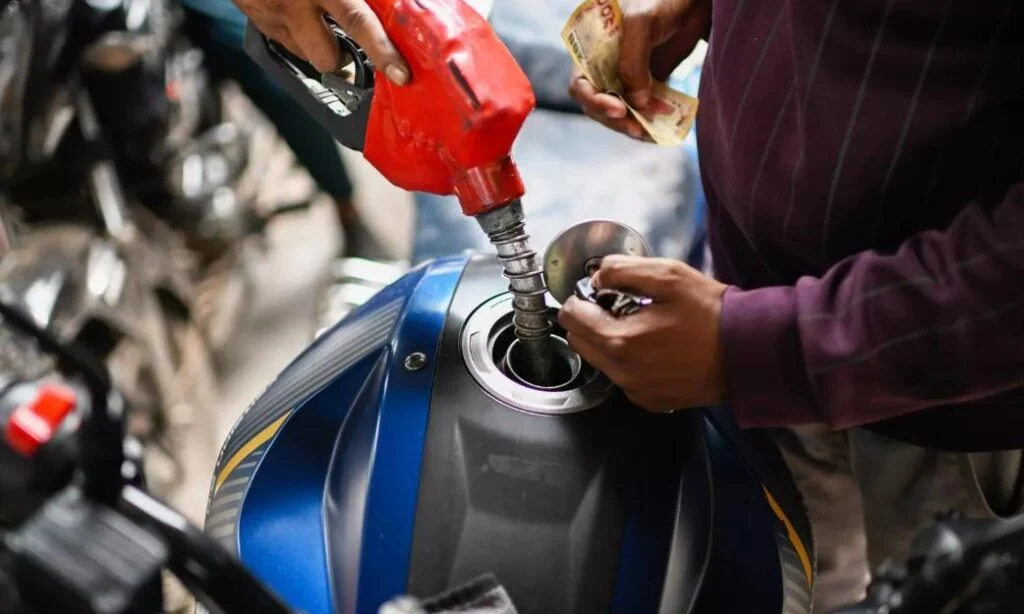
Image: Deccan Chronicle (file)
Your ₹102.12 Litre, Split Four Ways
- Of the ₹102.12 a litre of petrol costs in Delhi, about ₹69.80 is the price the oil company charges the pump, about ₹11.90 is central excise, about ₹16.59 is Delhi’s VAT and about ₹3.83 is the dealer’s commission. These are IPB News estimates from published tax rates; oil companies do not publish the daily dealer price.
- Taxes make up about 28% of the Delhi price, far less than in earlier years, because the Centre cut excise by ₹10 a litre on 27 March 2026.
- State-run oil companies have held petrol at ₹102.12 and diesel at ₹95.20 since late May, after raising both by about ₹7.5 from 15 May. Private retailers Jio-BP and Nayara raised their prices in October.
- The Indian crude basket averaged about $120 a barrel in early October, against $69 in February.
A driver who fills 10 litres of petrol at an Indian Oil pump in Delhi pays ₹1,021.20. Close to ₹700 of that goes to the oil company for the fuel itself, and a little under ₹285 goes to the Central and Delhi governments as tax. The petrol price breakup has changed sharply this year. The Centre cut its excise duty by ₹10 a litre in March as crude prices jumped after war broke out in West Asia, and state-run oil companies then raised pump prices four times in May. Since late May, the price at Indian Oil, Bharat Petroleum and Hindustan Petroleum pumps has not moved, even as the crude India buys swung between about $70 and $120 a barrel.
Who decides that price, and who absorbs the gap when crude rises, is less clear than the government’s position that prices are set by the market. Below: where each rupee of a Delhi litre goes, what the March excise cut did and did not do, the losses oil companies say they are carrying, and why the same litre costs ₹14 more in Hyderabad.
Where Each Rupee of a Delhi Litre Goes
A litre of petrol is priced in layers. The oil company charges the pump a dealer price that covers crude, freight, refining, ethanol blending and its own margin. The Centre adds excise duty, a fixed amount per litre. The dealer adds a commission. The state then charges VAT as a percentage on top of all three, which is why a higher base price also means more VAT for the state.
Also read LPG Distributors Protest in Delhi Over Commission; Strike Threatened
| Part of the price (Delhi, petrol) | Per litre | Share |
|---|---|---|
| Oil company’s price to the dealer | about ₹69.80 | 68.4% |
| Central excise duty and cesses | about ₹11.90 | 11.7% |
| Dealer commission | about ₹3.83 | 3.7% |
| Delhi VAT (19.40%) | about ₹16.59 | 16.2% |
| Retail price | ₹102.12 | 100% |
Two things stand out. Taxes are now about ₹28.49 of a litre, or 28% of the price. And in Delhi the state now earns more per litre of petrol than the Centre does, because the Centre’s share fell with the excise cut while Delhi’s VAT, charged as a percentage, did not.
The ₹10 Excise Cut That Did Not Reach the Pump
On 27 March 2026, the Centre reduced the special additional excise duty on petrol from ₹13 to ₹3 a litre and on diesel from ₹10 to nil. Finance Minister Nirmala Sitharaman said the move would protect consumers from price rises caused by the West Asia crisis. At the same time the government put export duties of ₹21.5 a litre on diesel and ₹29.5 on aviation turbine fuel, to keep supplies at home.
Pump prices did not fall. The cut was absorbed by the oil companies, which were then selling below cost, so its effect was to stop a rise rather than to lower the price. In a written reply in the Lok Sabha on 4 August, the government said the cut protected consumers, and that Brent crude peaked at $138.2 a barrel in April while retail prices rose only “marginally”. The reply put average CPI inflation at 3.9% in April to June. Since then inflation has climbed to 5.54% in September, its highest in 23 months.
Four Hikes in May, Then a Freeze
Before May, petrol in Delhi had stayed at ₹94.77 and diesel at ₹87.67 for about two years. From 15 May, the state-run companies raised petrol by ₹7.38 a litre and diesel by ₹7.52 in four steps, the first increase in four years. That took petrol past ₹100 in Delhi for the first time since 2022. The price has stayed at ₹102.12 since.
The crude India buys has not stayed still. The Indian basket, which the Petroleum Planning and Analysis Cell (PPAC) tracks, averaged $69 a barrel in February, hit an all-time high of $156.29 on 19 March, fell to an average of about $82 in July and $90 in August, and averaged about $120 in early October. Brent was about $114 a barrel in early trade on 26 October. Through all of it, the state-run price stayed the same.
The ₹2.19 Lakh Crore the Oil Companies Say They Lost
Petroleum Minister Hardeep Singh Puri said on 2 July that state-run oil companies’ under-recoveries, the gap between their cost and their selling price, had reached about ₹2.18 lakh crore up to 30 June, including LPG. For April to June alone, he put the under-recovery at ₹19,905 crore on petrol, ₹1.44 lakh crore on diesel and ₹24,148 crore on LPG, and the actual loss at ₹74,781 crore. Crude was falling then, and he said there was no justification yet for a price cut because the companies were still recovering those losses.
By late September the direction had reversed. With crude back above $100, the rating agency ICRA estimated that the companies were losing about ₹5 a litre on petrol and ₹23 a litre on diesel, or about ₹530 crore a day. The government’s stated position, given in March, is that fuel prices are deregulated and that a price change is a “corporate call” for the companies. The record shows those companies did not cut prices when crude fell in July, and have not raised them since crude rose again in September.
Private Pumps Have Already Raised Prices
Private retailers, which do not carry the same expectation to hold prices, have moved. Jio-BP raised petrol by ₹5 a litre and diesel by ₹3 from 11 October at its 2,304 pumps. Nayara Energy had already raised petrol by ₹5 and diesel by ₹3 across 7,108 pumps on 3 October. Indian Oil, BPCL and HPCL run about 90% of the country’s fuel retail market, with more than 1,03,000 pumps, so for most drivers the state-run price is still the one that counts.
Why Hyderabad Pays ₹14 More
The oil company’s price and the central excise are the same across the country. The difference between cities is almost entirely state tax. On 26 October, petrol cost ₹102.12 in Delhi, ₹107.76 in Chennai, ₹111.21 in Mumbai and ₹116.15 in Hyderabad. Maharashtra adds a per-litre cess on top of its VAT, and Telangana’s VAT rate is among the highest in the country. Because VAT is a percentage, every rupee added to the base price raises the state’s take too, which is one reason states have resisted bringing petrol and diesel under GST.
What Could Move the Price Next
SBI Research said on 12 October that Brent could reach $110 and the Indian basket $130 within 10 days. The government reviews its fuel export duties every fortnight; for the fortnight from 16 October it raised the levy on petrol exports and cut it on diesel, and the next review falls on 1 November. Neither the Petroleum Ministry nor the state-run companies have said at what crude price, or what level of losses, they would revise pump prices. The ministry has not set out how long the companies are expected to carry diesel losses, or who meets them if crude stays above $100.
For now, the price a Delhi driver pays depends less on the day’s crude price than on a decision that has not been announced. Oil prices have also weighed on the stock market, as our report on the Sensex on 23 October shows. More explainers are on our Economy page.
Frequently Asked Questions
How much tax is there on a litre of petrol in Delhi?
About ₹28.49 of the ₹102.12 price, by IPB News’s estimate: roughly ₹11.90 in central excise and cesses and ₹16.59 in Delhi VAT at 19.40%.
Why have petrol prices not changed since May?
State-run oil companies have held prices at ₹102.12 for petrol and ₹95.20 for diesel in Delhi since late May. The Petroleum Minister has said the companies are recovering past losses, which he put at about ₹2.18 lakh crore up to June.
Did the March excise duty cut lower petrol prices?
No. The ₹10 a litre cut on 27 March 2026 was absorbed by the oil companies to offset losses, which prevented a price rise rather than lowering the pump price.
Why is petrol cheaper in Delhi than in Mumbai or Hyderabad?
Central excise is the same everywhere. Delhi’s VAT on petrol, 19.40%, is lower than the taxes charged in Maharashtra and Telangana.
Source: Government’s Lok Sabha reply on the ₹10 excise duty cut, 4 August 2026; All India Radio on the 27 March 2026 excise cut; FIPI policy and economic report, May 2026. Also based on reporting by Republic, Free Press Journal, Kotak Neo, TaxTMI (PTI), PSU Watch, Business Today, Business Today (crude basket), Business Today (SBI Research), HDFC Sky, HDFC Sky (ICRA estimate), Goodreturns, Kotak Neo (May hikes), HDFC Sky (26 October prices) and ClearTax.
Image: Deccan Chronicle (file).