Freedom Fighters’ Pension: Supreme Court Says No Strict Proof Needed
Families of freedom fighters in Madhya Pradesh and elsewhere can no longer be turned away only because records of 1940s jail terms are missing or claims were filed late.
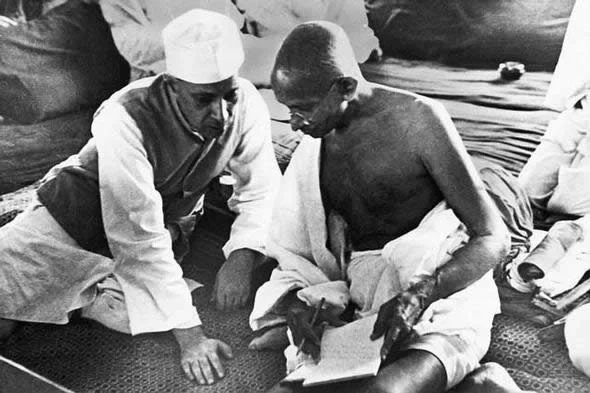
Image: Archive photograph, 1942 / Wikimedia Commons
The Supreme Court has restored the freedom fighter’s pension claim of Sushila Tripathi, widow of the late Ramakant Tripathi, and directed Madhya Pradesh to pay it from 6 April 1991 with 6 per cent interest. A bench of Justices P S Narasimha and Alok Aradhe held that authorities must take a practical approach and cannot insist on strict proof of events from 1945-46, according to a LiveLaw report published on 5 November 2026.
Old Papers No Longer a Barrier
The Court set aside a Division Bench order of the Madhya Pradesh High Court that had thrown out the claim for delay, laches and estoppel, and restored the Single Judge’s order. It said the standard of proof is the balance of probabilities, not the standard of a criminal trial, and that the State, not the family, must search jail and official records. “A claimant cannot be expected to produce documents of events half a century old,” the Court said, as quoted by LiveLaw.
Pension Backdated 35 Years
Ramakant Tripathi took part in the Maihar Praja Mandal Movement and was jailed for 25 days, records cited in the case show. The State rejected his claim on 6 April 1991 through a non-speaking order, one that gave no reasons. He died in 2016. His widow then approached the District Collector, whose denial the State upheld. The Court found the High Court had overlooked the District Freedom Fighters List, which showed his participation and his jailing. The claim falls under the Madhya Pradesh Swatantrata Sangram Sainik Sammannidhi Rules, 1972.
Also read Nirmala Sapre Disqualification: Supreme Court Gives MP Speaker 2 Months
Orders Follow on Payment
The State must now calculate and release the arrears with interest. The judgment does not set a separate deadline in the reports available so far. Other pending claims under the 1972 Rules and similar schemes in other states can be expected to cite the ruling, though each will depend on its own records. Readers can see more Supreme Court coverage under the Supreme Court tag, including this week’s ruling on the 24-hour rule.
Source: Based on reporting by LiveLaw and Lawyer E-News.
Image: Archive photograph of Gandhi and Nehru, 1942 / Wikimedia Commons.
Get IPB News first