Panchkula School Assault: How a Six-Year-Old Lay Hurt for Two Hours
She lay hurt in a locked classroom for two hours before her father found her. Haryana has suspended three staff and ordered a statewide audit, but not explained why no adult saw it.
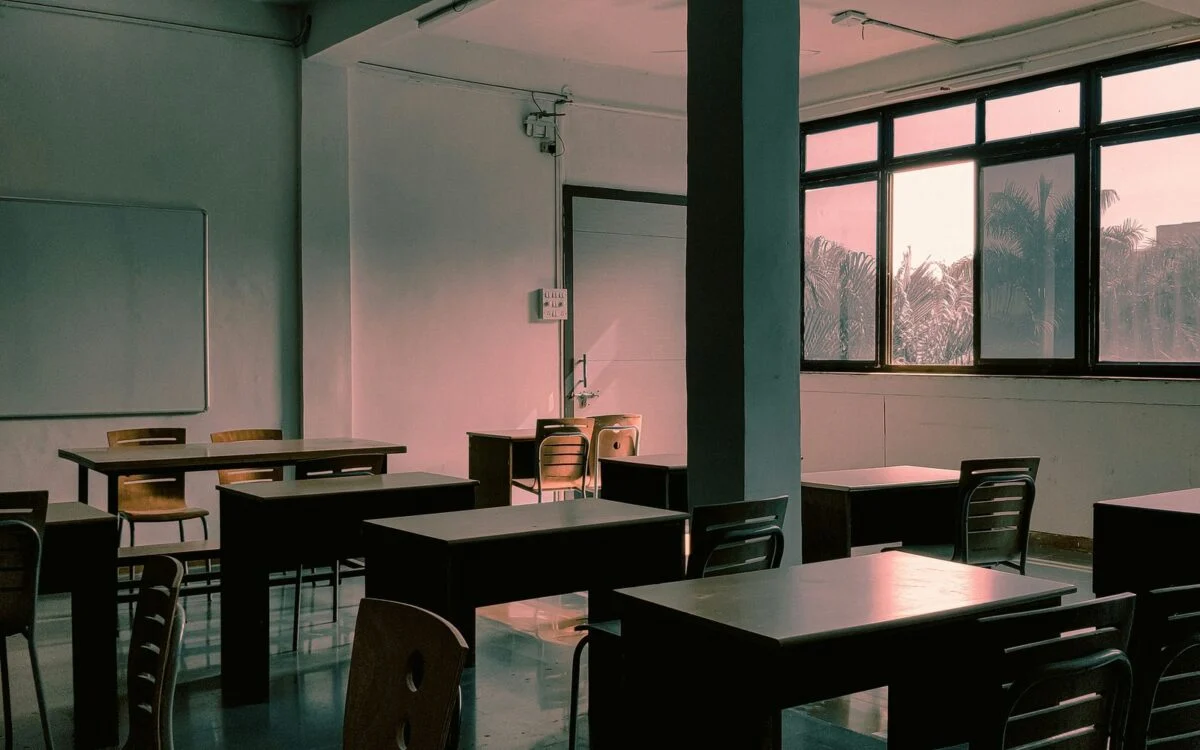
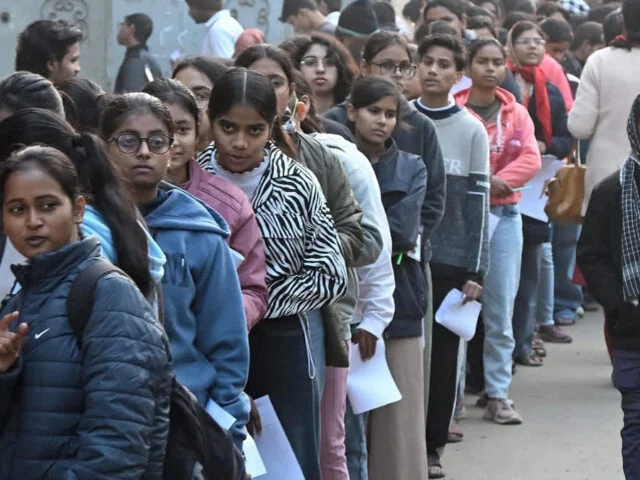
Representative image. Photo: Janmesh Shah / Pexels
A six-year-old kindergarten student was seriously injured inside a government school in Panchkula, Haryana, on the afternoon of 28 October 2026, allegedly by an eight-year-old Class 3 student, and lay unattended in a first-floor classroom for close to two hours before her family found her.
The school day had already ended when anyone noticed she was missing. The auto-rickshaw driver who takes her home waited, then called her father. He came to the school and asked staff to look for her. According to the family, it was another child who finally led them upstairs, to a room that had been locked from the outside. She was unconscious, with injuries to her head and face, including a fractured nose.
She was taken first to a hospital in Panchkula and then to PGIMER, Chandigarh. By 2 November, she was showing signs of improvement but had not recovered.
Also read Delhi-NCR, Haryana Hail and 70 kmph Gust Alert for 30 October: IMD
The Panchkula school assault has been reported, mostly, as a story about one violent child. It is more useful to read it as a story about an empty room. A school is built on the promise that small children are never out of an adult’s sight. On 28 October, in one Haryana government school, that promise failed for long enough for a child to be beaten and left. Everything the state has done since is an attempt to explain how.
Panchkula School Case: Where Things Stand on 2 November
- 28 October, 3 pm to 4 pm: the girl is allegedly assaulted in an empty first-floor classroom. The room is recorded on CCTV.
- 31 October: two primary teachers suspended. Police register an FIR against the principal, the class in-charge and the watchman. The Juvenile Justice Board sends the boy to an observation home in Ambala.
- 31 October: the state forms a five-member inquiry committee with a seven-day deadline and orders a safety audit of every school in Haryana. The child rights and human rights commissions step in.
- 1 November: the principal is suspended.
The Family’s Account of 28 October
The family’s account, given to news agencies by the girl’s uncle, is the most detailed one so far. Police have not contradicted it, but have not confirmed every part of it either.
The uncle said the two children did not know each other before that day. Their classes had been made to sit together because, he said, teachers told him some staff had been sent on government duty elsewhere and two to three classes had been combined under one teacher. He said the boy told the girl her father had come to meet her, and took her upstairs.
What followed was recorded on the classroom camera. Police and family accounts describe the boy hitting her head against a bench, kicking her and striking her with a brick and other objects, and continuing after she lost consciousness.
The family has offered explanations for why. The uncle said the girl had called the boy “pagal” after he troubled her. Her father has separately claimed the boy played a mobile game and copied it. None of this has been tested. The police have said they will act on the boy’s psychological assessment, not on theories.
Several reports, citing the state government, describe the girl as a child with special needs. That detail matters for the inquiry, and we come back to it below.
Suspensions, an FIR and a Seven-Day Inquiry
The government moved fast once the CCTV footage spread online.
Two primary teachers were suspended on 31 October for alleged negligence. The principal was suspended on 1 November by an order from the Principal Secretary, School Education. Panchkula Police registered an FIR against the principal, the class in-charge and the school watchman under Section 75 of the Juvenile Justice Act, which covers cruelty to a child by a person in charge of them, and Section 125(b) of the Bharatiya Nyaya Sanhita, on acts that endanger life or personal safety.
Education Minister Mahipal Dhanda said negligence that put children at risk would not be tolerated and that the government stood with the family. The state said it would bear the full cost of treatment. PGIMER’s director, Dr Vivek Lal, visited the girl and assured the family of all medical help.
A five-member committee, headed by Panchkula’s Additional Deputy Commissioner, has seven days to report. Its members are the District Education Officer, the District Child Protection Officer, a police officer and a special educator or child psychologist. Its brief is specific: go through the CCTV footage, check which teachers, assistants and special educators were actually on duty, and find out whether there was any delay in first aid or in getting the child to hospital.
The Haryana State Commission for Protection of Child Rights has asked the District Education Officer for a point-wise report. Justice Lalit Batra, chairperson of the Haryana Human Rights Commission, inspected the school. Panchkula Police have said a detailed safety SOP will be issued and made mandatory for every school in the district.
This is a long list. It is also, almost entirely, a list of things done after the fact.
One Teacher, Three Classes
The single most important line in this case may be the uncle’s account of combined classes. If it holds up in the inquiry, the assault becomes less a story about one school’s carelessness and more about how Haryana staffs its schools.
The numbers are not new. In February 2026, the government told the Assembly that 15,451 teacher posts in its schools were vacant as of January, in a written reply to a question from Congress MLA Aditya Surjewala. Minutes of the Samagra Shiksha Project Approval Board meeting for 2026-27, reported in June, showed single-teacher government primary schools rising from 696 in 2023-24 to 968 in 2024-25.
The opposition has been making this argument all year. In January, Congress MP Randeep Surjewala said the shortage meant existing teachers were also being loaded with election work, surveys, census duty and government publicity. Teachers being pulled away for non-teaching work is a national pattern, not only a Haryana one. Census rules were amended this year to bring even private school teachers in as enumerators.
When a school is short of hands, the first thing to go is supervision of the youngest children between lessons. That gap is exactly where this assault happened. Suspending the teachers who were present does not fill it.
A CCTV Feed Nobody Was Watching
The classroom had CCTV. The feed, the family said, ran to the principal’s office. The uncle told IANS the principal’s duty hours had ended at 3 pm, and that nobody was watching the screen when the girl was taken upstairs.
This is the uncomfortable lesson of the case. Haryana, like many states, has spent heavily on cameras in schools. A camera records. It does not intervene. Here, the recording became evidence, then a viral video, then the trigger for official action. It did nothing for the child in the room.
Justice Batra said CCTV in every school is necessary, both for safety and to catch corporal punishment, but that the footage should never be made public. The second half of that sentence was ignored online within hours. The statewide audit is supposed to check whether school cameras are working. A more useful question for it would be who is assigned to watch them, and when.
Special Educators and the Disabilities Act
The inquiry committee has been told to check the school’s compliance with the Ministry of Education’s School Safety and Security Guidelines, 2021, and the Rights of Persons with Disabilities Act, 2016. It has also been told to verify whether special educators were on duty.
If the girl does have special needs, the state owed her more than the general duty of care, not less. A kindergarten child who may find it harder to call for help or describe what happened should have been the last child in that school to be out of sight. Whether a special educator was posted there, and where that person was at 3 pm, is a question the committee should answer in public.
An Eight-Year-Old in an Observation Home
Much of the television debate since the footage spread has been about “juvenile crime” and whether India needs harsher laws for children. That debate does not fit this case.
Under Section 20 of the Bharatiya Nyaya Sanhita, nothing done by a child under seven is an offence. Between seven and 12, under Section 21, a child is held responsible only if they had the maturity to understand the nature and consequences of the act. That is why ACP Vikram Nehra said the boy was undergoing an assessment, which is done for children aged seven to 12, and why further action waits on its findings.
The Juvenile Justice Board sent him to an observation home in Ambala on 31 October, described as a place of safety while the inquiry continues. The law treats him as a child who needs care and assessment. An eight-year-old who did what the footage shows needs help, and an inquiry into what he has been exposed to. He is not the person who was responsible for supervising that classroom.
Quick Action, but Only Against Individuals
It is fair to say the state did not sit on this. Within four days it suspended three staff, filed an FIR against school employees, formed a committee with a deadline, took on the medical bills and ordered an audit of every school. The Education Minister spoke publicly. That is quicker than in many similar cases elsewhere.
But every one of those steps looks at individuals: who was negligent, who should be punished. None of them, so far, addresses the system the uncle described: a school short enough of staff that classes were merged, with teachers sent off on other duties, and a camera feed nobody was assigned to watch. As of the evening of 2 November, we could not find an on-record response from the Congress, INLD or AAP to this specific incident, though the Congress’s criticism of teacher vacancies predates it by months.
India has seen schools fail children before, and the pattern after each case is familiar. Suspensions, a committee, an audit, and then quiet.
What the State Has Not Yet Explained
Four days in, several basic questions have no official answer. The government has not said which teachers were away on other duty that afternoon, on whose orders, or why two to three classes were merged under one teacher. It has not said who, if anyone, was assigned to watch the CCTV feed after the principal’s duty ended at 3 pm.
Nor has it explained who locked the classroom from the outside, how long staff took to start searching after the father arrived, or whether a special educator was posted at the school at all. These are the questions the five-member committee was set up to answer, and they are the ones its report should be judged on.
Committee Report Due Around 7 November
The Panchkula inquiry committee’s report is due around 7 November. Three things would show whether this case changes anything beyond one school.
First, the report and the statewide audit should be published, with district-level findings on staffing, not just CCTV counts. Second, Haryana should say how many teachers in its primary schools were on non-teaching duty during school hours last month, and set a rule that the youngest classes are never left without a named adult. Third, the SOP Panchkula Police have promised should be public, so parents know what their child’s school is now required to do.
A six-year-old was lying in a locked room while the school day ended around her. The people who failed her deserve the inquiry they are getting. So does the system that left so few people there to begin with.
Frequently Asked Questions
What happened in the Panchkula school incident?
On 28 October 2026, a six-year-old kindergarten student was seriously injured in a first-floor classroom of a government school in Panchkula, Haryana, allegedly by an eight-year-old Class 3 student. She was found unconscious about two hours later.
How is the girl now?
She is being treated at PGIMER, Chandigarh. As of 2 November 2026 she was improving but had not fully recovered. The Haryana government has said it will bear the cost of treatment.
What action has been taken against the school?
The principal and two primary teachers have been suspended. Panchkula Police registered an FIR against the principal, the class in-charge and the watchman under Section 75 of the Juvenile Justice Act and Section 125(b) of the BNS.
What will happen to the eight-year-old boy?
The Juvenile Justice Board has sent him to an observation home in Ambala as a place of safety. He is undergoing a psychological assessment, and police say further action depends on its findings.
What is the Haryana school safety audit?
After the incident, Education Minister Mahipal Dhanda ordered a safety audit of all schools in Haryana. It will check supervision of young children and students with special needs, working CCTV, and emergency response.
When is the inquiry report due?
A five-member committee headed by Panchkula’s Additional Deputy Commissioner was formed on 31 October 2026 and given seven days to report.
Source: Haryana government’s written reply in the Assembly, February 2026 (via PTI). Also based on reporting by The Tribune, IANS, ETV Bharat, The Statesman, Brut India, Prabhat Khabar and PTI. Featured image is representative: Janmesh Shah / Pexels.
Get IPB News first