EC Affidavit in Supreme Court: What It Says on SIR, CEC and Form 6
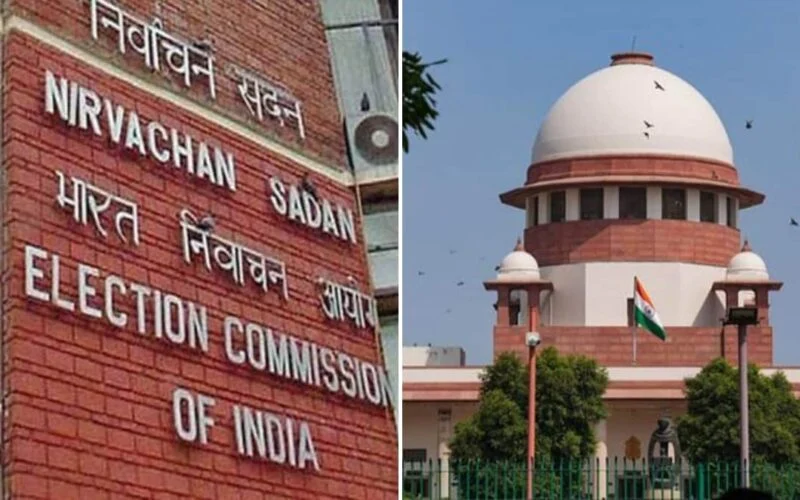
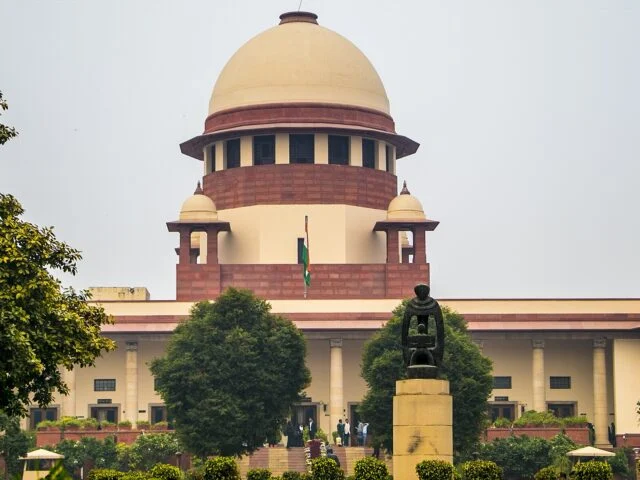
Image: PTI / X, via The Week
Unanimous, Says the Commission; Hearing on 27 October
- In a counter-affidavit filed on 26 October, the Election Commission of India (ECI) told the Supreme Court that all three of its orders for the Special Intensive Revision (SIR) of voter lists were passed unanimously, and that the affidavit itself was approved by the Chief Election Commissioner (CEC) and both Election Commissioners.
- It says Form 6, the voter enrolment form, was never amended, but concedes the online form “could create the impression” that it was, and has split the two parts from 21 October.
- It argues the petition to restrain CEC Gyanesh Kumar is not maintainable, because a CEC can be removed only the way a Supreme Court judge is.
- The Commission calls this a short reply and has reserved the right to file a point-by-point response. It does not take up the 14 objections one by one.
On 5 October, Chief Justice of India Surya Kant told the Election Commission’s counsel: “Modified Form 6 has not been approved by us, let us be very clear.” Three weeks later, the Election Commission affidavit in the Supreme Court says the form was never modified at all, while admitting that the way it appeared online could make people think it had been. The affidavit, filed on Monday, 26 October, by Deputy Election Commissioner Bhanu Prakash Yeturu, answers petitions that accuse CEC Gyanesh Kumar of taking key decisions on the voter-list revision alone, over the written objections of the two other members of the Commission.
The case reaches a bench of Chief Justice Surya Kant and Justices Joymalya Bagchi and V Mohana, which was expected to take it up on Tuesday, 27 October. Below: what the case is about, the affidavit’s main claims, where the Commission’s own earlier statements and the reported record differ, what it leaves unanswered, and what the court can do.
What the Case Is About
On 23 September, The Indian Express reported that Election Commissioners Sukhbir Singh Sandhu and Vivek Joshi had recorded objections at least 14 times between October 2025 and August 2026. According to the report, the objections covered a new question added to the online Form 6, the centralisation of access to the voter-roll database, appeals filed in West Bengal during the SIR, the reallocation of work on the Commission’s IT systems, and Goa voters whose names the software would not restore. Sandhu called the Form 6 change “unauthorised and illegal”, the paper reported.
Also read Maharashtra SIR: Supreme Court Seeks EC Reply on 3 Crore Deletions
Petitions followed. One, by Rakesh Kumar Singh, is a quo warranto plea asking Gyanesh Kumar to show by what authority he took the decisions, and seeking to restrain him from functioning as CEC. Another, argued by senior advocate Menaka Guruswamy, challenges the Form 6 change and the wider SIR process. On 5 October, the court refused to suspend the CEC without hearing him, asking, “Who will conduct the elections?”, and issued notice to the Commission, the CEC and both Election Commissioners. Justice Bagchi said that if the record showed decisions that were not unanimous, “we will injunct those decisions and say they are ultra-vires.”
Claim One: Every SIR Order Was Unanimous
The affidavit says the three SIR orders, of 24 June 2025, 27 October 2025 and 14 May 2026, were all approved by the full Commission, and that “all decisions concerning the Special Intensive Revision (SIR) of electoral rolls were taken unanimously by the Commission.” It relies on Section 18 of the 2023 law on the appointment of the CEC and Election Commissioners, which says the Commission should decide unanimously as far as possible and by majority otherwise.
Its answer to the 14 objections is that they were not decisions. Notes, queries, suggestions or observations written while a file is being processed “do not, by themselves, constitute Commission decisions”, it says. Files usually go first to one Election Commissioner, then the other, and then to the CEC; in urgent cases the commissioners approve electronically and the approval is put on file later. The petition, it argues, rests entirely on a newspaper report, which “is not treated as evidence of the facts it narrates”, and the petitioner did not check the facts with the Commission. It says it never released or authorised the release of any internal file to the media.
The detail that matters most is the one the Commission puts first: Sandhu and Joshi approved this affidavit. If the two commissioners who recorded the objections now stand behind a statement that every SIR decision was unanimous, the petitioners’ central claim, that the CEC overrode them, becomes harder to prove from the Commission’s own side.
Claim Two: Form 6 Was Never Amended
Form 6 is prescribed by the Registration of Electors Rules, 1960, and only the Central government can amend it. The Commission says it did not. The declaration that asks applicants to link themselves, their parents or their grandparents to the last intensively revised roll is, it says, a separate document: Annexure D of the June 2025 order, replaced by Annexure IV in the later orders. Its purpose is to map new applicants to earlier rolls.
The affidavit then concedes that the declaration was displayed online in a way that “could create the impression” that Form 6 had been amended. According to the Express report, from July an applicant could not submit the online Form 6 without answering the question about the last SIR roll. From 21 October, the Commission says, the online process is split into Form 6 and the SIR declaration, as on paper. That fix came 16 days after the Chief Justice’s remark in court.
Claim Three: No Name Is Added or Cut Without an ERO’s Order
On the centralisation of the voter database through its ECINet platform, the affidavit says “no name could be added to or deleted from the electoral roll except pursuant to an order passed by the competent ERO”, the Electoral Registration Officer. It has set up a committee of experts from IIT Madras and IISc Bengaluru to check the platform. Voters who cannot be mapped to earlier rolls will not usually need to attend hearings: Booth Level Officers will collect their documents at home and upload them, and hearings will be held only in exceptional cases, preferably online.
Claim Four: The CEC Cannot Be Restrained This Way
The Commission argues that the plea to stop Gyanesh Kumar from functioning is not maintainable. Under Article 324(5) of the Constitution, it says, “the CEC can be removed only in the same manner and on the same grounds as a Supreme Court judge”, which means by Parliament. Opposition MPs tried that route: in April 2026, Lok Sabha Speaker Om Birla and Rajya Sabha Chairman CP Radhakrishnan refused to admit their notices of motion to remove Kumar.
Where the Record and the Affidavit Differ
Goa. The Express reported that software stopped officials from recording the eligibility of 97 Goa voters whose documents had been accepted. In a press note on 26 September, the Commission said 81 of the 97 had since filed Form 6, according to The Probe. The affidavit gives a different account: of the 97 said to be left out, 88 were already enrolled, six were abroad and three held Portuguese passports. The affidavit does not explain why its figures differ from its own press note a month earlier.
West Bengal. Sandhu questioned appeals filed during Bengal’s SIR, which The Probe put at 16.10 lakh. The affidavit says appeals against voter inclusion were filed by officers of the state Chief Electoral Officer under Supreme Court orders, and that “these matters were not brought to the Commission.” That defends the appeals as lawful. It also confirms the point the commissioners raised: the full Commission did not approve them.
“Routine” objections. On 23 September, the Commission said differing views were “a normal part of deliberation”. Three days later, its second press note promised agendas and minutes for meetings, prior approval for officers’ foreign travel, and new IT modules routed through a committee and the Commission, The Probe reported, covering several of the complaints the commissioners had made. The affidavit also says a 28 July order reallocating work, issued by an Additional Secretary on deputation, was never carried out after both Election Commissioners wrote to the Cabinet Secretary and then issued a joint direction on 30 July. It calls allegations based on those letters “misconceived”.
What the Affidavit Does Not Answer
The affidavit does not go through the 14 objections one by one, and the Commission has said a detailed reply may follow. It does not say who authorised the July change to the online form, or why the split came only on 21 October. Joshi reportedly said he had received no agendas or minutes for more than a year; the affidavit does not say whether minutes exist for the meetings at which the three SIR orders were approved, which is the record that would show unanimity. It does not say what the ECINet changes were, or when the IIT and IISc committee will report.
These gaps matter beyond the courtroom. More than 13 crore names have been left off draft rolls across the three SIR phases, as our state-wise analysis of SIR deletions shows, and Form 6 is now the main way back on to the list for people who were cut. The same bench on Monday issued notice on a plea alleging that about 33% of voters were cut in parts of Maharashtra, refused to extend the deadline for claims there, and listed that case for 5 November. Senior advocate Arvind Datar argued that “Form 6 is meant for registration of new voters, not for voters who are already enrolled.”
What the Court Can Do Next
The bench has already set out its test: if the files show that SIR decisions were not taken unanimously or by majority, it said it could strike them down. It can ask the Commission for the files and minutes, accept the affidavit, or wait for the detailed reply. It has shown no inclination to remove or suspend the CEC, and the Constitution leaves removal to Parliament. Opposition parties plan a rally on 1 November demanding Kumar’s resignation and a halt to the SIR. Our earlier reports cover the Anti-SIR People’s March and the Delhi High Court’s ruling on Form 6. More analysis is on our In-depth Analysis page.
Frequently Asked Questions
What did the Election Commission tell the Supreme Court?
In an affidavit filed on 26 October 2026, it said all three SIR orders were passed unanimously, that Form 6 was not amended, that no name can be added or deleted without an ERO’s order, and that the plea to restrain the CEC is not maintainable.
Was Form 6 changed during the SIR?
The Commission says no: the SIR declaration is a separate document. It concedes the online form could look amended, and split the two parts from 21 October 2026.
Who are the petitioners against CEC Gyanesh Kumar?
The lead quo warranto petition is by Rakesh Kumar Singh. A connected plea argued by Menaka Guruswamy challenges the Form 6 change and the SIR process.
Can the Supreme Court remove the CEC?
Under Article 324(5), the CEC can be removed only like a Supreme Court judge, through Parliament. The court can, however, strike down Commission decisions that it finds were not lawfully taken.
Source: Election Commission of India counter-affidavit in Rakesh Kumar Singh v. Union of India, W.P.(C) No. 1246/2026, as reported. Also based on reporting by LiveLaw, The Week, Business Today, ETV Bharat, ANI, The Wire, Outlook, The Probe, ANI (Maharashtra plea), Bar and Bench and All India Radio.
Image: PTI / X, via The Week.
How the SIR story developed
- EC Affidavit in Supreme Court: What It Says on SIR, CEC and Form 6You are reading
- Maharashtra SIR: Supreme Court Seeks EC Reply on 3 Crore Deletions
- SIR Software Name Withheld: EC Cites Trade Secrets in RTI Reply
- SIR Voter List: Over 13 Crore Names Cut From Draft Rolls
- NSUI Workers Detained During Delhi March Seeking CEC’s Resignation
- Voters Deleted in SIR Can Apply Again Through Form 6: Delhi HC
- Chouhan Says Opposition Spreading Lies as Regime Change Row Grows
Get IPB News first