Onion Prices Doubled: Why Food Inflation Hit 7.74% in September
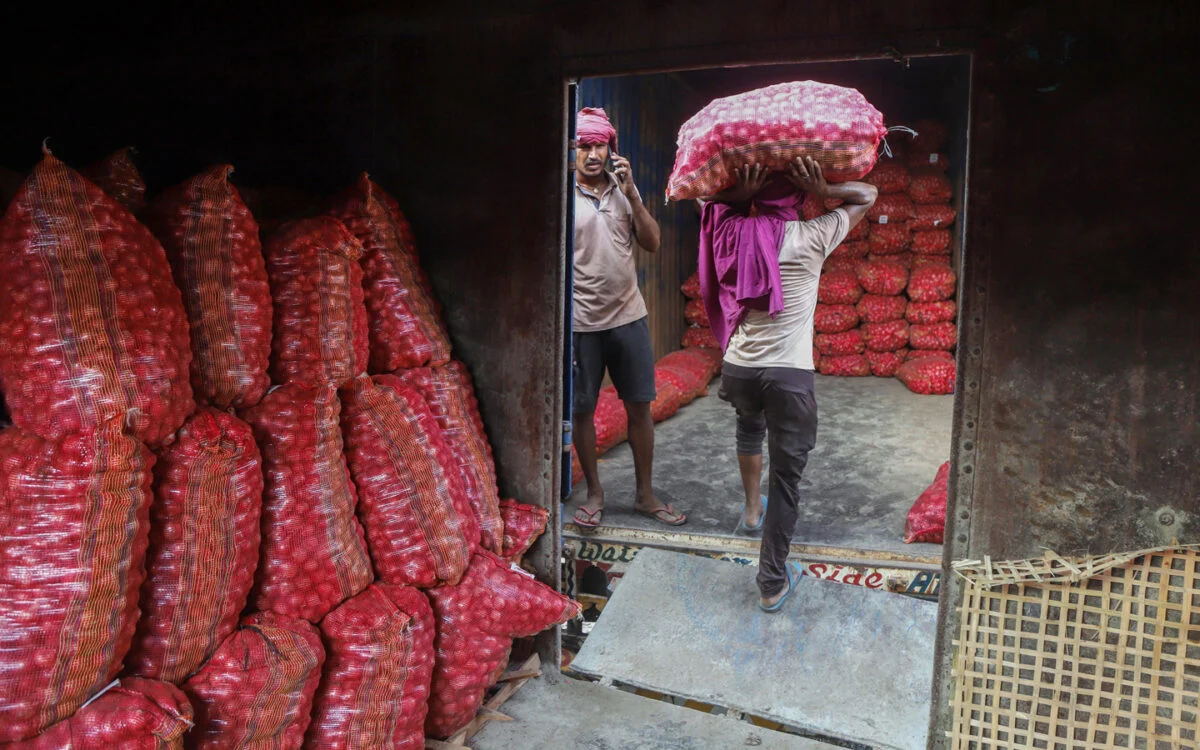
Image: DD India
Onion Up 108%, Tomato and Potato Down
- Retail inflation rose to 5.54% in September 2026, from 4.83% in August, the highest in 23 months and the fourth month above the RBI’s 4% target. Food inflation rose to 7.74%.
- Onion prices were 108% higher than a year earlier, garlic 55% and ginger 63%. Tomatoes and potatoes were cheaper than in September 2025.
- Part of the onion jump is a low base: a year ago, farmers at Lasalgaon were selling below their cost of production. Part is a rabi crop damaged by untimely rain.
- Rural India is hit harder: rural inflation was 6.08%, above the RBI’s 6% upper limit, against 4.88% in cities.
A kilo of onions cost ₹58 in Delhi on 5 September, ₹63 in Chennai and ₹53 in Mumbai. A year earlier, onion growers at Lasalgaon in Nashik, Asia’s largest onion market, were getting less than it cost them to grow the crop. That gap is the main reason food inflation in September 2026 rose to 7.74%, according to data released by the Ministry of Statistics and Programme Implementation (MoSPI) on 12 October. Retail inflation reached 5.54%, its highest in 23 months, five days after the Reserve Bank of India (RBI) raised interest rates for the first time since 2023.
The headline number hides a split kitchen. Onion, garlic and ginger prices jumped; tomato and potato prices fell. Rural households saw prices rise faster than urban ones. Below: which items moved, why onions doubled, what the government’s buffer stock did and did not do, where inflation is spreading beyond food, and what comes next.
Six Months of Rising Prices
Inflation has gone up every month since April 2026, under MoSPI’s new Consumer Price Index (CPI) series with 2024 as the base year. It was 3.48% in April, 3.93% in May, 4.38% in June, 4.45% in July, 4.83% in August and 5.54% in September. The overall price index rose about 0.69% in September alone; the food index rose about 1.30%.
Also read SBI Chairman CS Setty Expects 50 bps RBI Rate Hike in December
The RBI’s tolerance band runs from 2% to 6%, around a 4% target. September’s national figure is inside the band. The rural figure, 6.08%, is not. Rural food inflation was 8.06%, against 7.18% in cities, and the gap between rural and urban inflation widened from 0.93 percentage points in August to 1.20 in September.
The Items That Moved the Most
| Item | August 2026 | September 2026 |
|---|---|---|
| Onion | 48.78% | 108.09% |
| Ginger | 73.82% | 62.85% |
| Garlic | 43.60% | 54.62% |
| Lemon | 15.15% | 36.41% |
| Tomato | −31.09% | −8.62% |
| Potato | −13.15% | −11.50% |
An onion price that has more than doubled does not double the cost of living, because onions carry a small weight in the CPI basket. But they are bought by nearly every household every week, which is why a jump in onion prices is felt far more than its weight suggests. Tomato prices are still lower than a year ago, though the fall has narrowed sharply since August.
Why Onions Doubled: A Low Base and a Damaged Crop
The 108% figure compares September 2026 with September 2025, when onions were unusually cheap. Before Diwali last year, the average price at Lasalgaon was around ₹1,100 a quintal, and in early November 2025 it was ₹1,350 to ₹1,710, while growers put their cost of production at about ₹1,800 a quintal. Heavy rain in September 2025 also wiped out much of that year’s standing kharif crop in Nashik. A price that low a year ago makes this year’s increase look larger in percentage terms.
The other half of the story is this year’s supply. Consumer Affairs Secretary Nidhi Khare said on 6 September that the rabi onion crop, which is stored and sold through the lean months, had been damaged by untimely rain at harvest. The rabi crop carries the market from spring until the new kharif onions arrive in mid-October, so damage to it shows up in prices from August to October.
The Buffer That Was Meant to Hold Prices
On 26 August, the Ministry of Consumer Affairs said onion availability was “comfortable”, with 2025-26 production estimated at 307.37 lakh tonnes, nearly the same as the year before. It had set a target of 2 lakh tonnes of rabi onion for its price stabilisation buffer for 2026-27. By late August, about 1.21 lakh tonnes had been bought, or about 60% of the target. In 2023-24, by comparison, the government raised its onion buffer to 5 lakh tonnes.
Sales from the buffer began on 24 August at ₹35 a kilo through NCCF, NAFED, Kendriya Bhandar and Safal outlets and mobile vans, and two ‘Kanda Express’ trains carried onions from Nashik to Delhi and Chennai. In the first 10 days, about 4,000 tonnes were sold across 17 cities. NCCF’s managing director said the sales had brought prices down by ₹2 to ₹3 a kilo. Over the same period, the all-India average retail price rose from ₹48.50 to ₹50.79 a kilo, according to Department of Consumer Affairs data. Onion inflation for September, as measured by MoSPI, more than doubled from August’s rate. Sales were stepped up after that: by 7 October, the ministry said, more than 2 lakh quintals (about 20,000 tonnes) had been sold through eight Kanda Express trains and 467 trucks in 123 cities. That is about a sixth of the 1.21 lakh tonnes the government had bought.
Prices Rising Beyond the Kitchen
Food is not the only pressure. Eating out, under restaurants and accommodation services, was 9.36% costlier than a year earlier, and transport 5.01%. The personal care and miscellaneous group rose 13.75%, driven largely by silver jewellery, up nearly 88%. Housing and fuel rose 2.74% and health 1.40%. The rating agency ICRA estimated core inflation, which leaves out food and fuel, at 4.6%.
Among states, Tamil Nadu recorded 6.81%, Odisha 6.70%, Madhya Pradesh 6.68% and Telangana 6.64%, all above the national figure. Delhi’s rate was 3.40%. Petrol and diesel prices have been frozen at state-run pumps since late May, which has kept fuel out of the headline rise so far; the rise in crude oil since September has not yet reached the pump.
What the RBI Expects Next
The RBI raised its forecast for 2026-27 inflation from 5.0% to 5.2% at its 7 October meeting and projected 6.0% for the October to December quarter, the top of its band. Its Monetary Policy Committee described its stance as “calibrated tightening”, and its minutes say rate cuts are off the table for now, as our report on the MPC minutes sets out. ICRA said another rate hike appears likely in December.
Officials expect the new kharif onion crop, arriving from mid-October, to ease prices; wholesale rates at Lasalgaon had begun to fall in early October as onions from Karnataka and Andhra Pradesh came in. The ministry said the weighted average mandi price in Maharashtra fell by nearly 13% between 16 September and 3 October, and that retail prices had dropped by ₹1 to ₹21 a kilo in 126 cities over the previous two weeks. Against that, the southwest monsoon ended 12% short and reservoirs were 31% below normal after the season, which puts pressure on the rabi crop. The ministry has not said how much more onion it will buy for the buffer or whether the ₹35 sales will continue past October. MoSPI releases October’s CPI on 12 November, and the RBI meets again from 2 to 4 December.
Frequently Asked Questions
What was India’s inflation rate in September 2026?
Retail (CPI) inflation was 5.54%, up from 4.83% in August. Food inflation was 7.74%, rural inflation 6.08% and urban inflation 4.88%.
Why are onion prices so high?
Onion prices in September were 108% higher than a year earlier, partly because they were very low in September 2025 and partly because untimely rain damaged this year’s stored rabi crop.
Where can I buy onions at ₹35 a kg?
The government has been selling buffer onions at ₹35 a kilo through NCCF and NAFED outlets and mobile vans, Kendriya Bhandar and Safal stores in selected cities.
When is the next inflation data released?
MoSPI is scheduled to release October 2026 CPI data on 12 November 2026.
Source: MoSPI CPI press release for September 2026; Ministry of Consumer Affairs release on onion buffer stock; DD India on the Kanda Express; Telangana Today on the ministry’s 7 October statement. Also based on reporting by Finnovate, Business Today, Business Today (buffer sales), The Hindu (via RIPR), Ventura Securities, Global Agriculture, Agriplex, FreshPlaza, Ziro Market, ICRA and All India Radio (2023 buffer).
Image: DD India.