Resigned MLAs and Bypoll Costs: Supreme Court Issues Notice to Centre
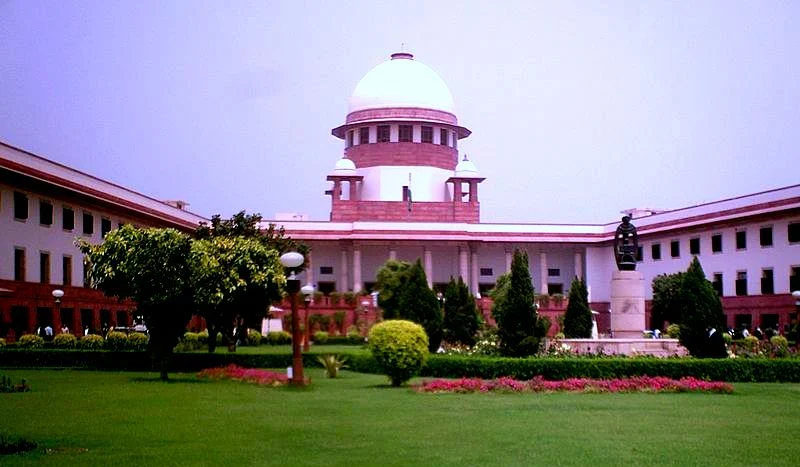
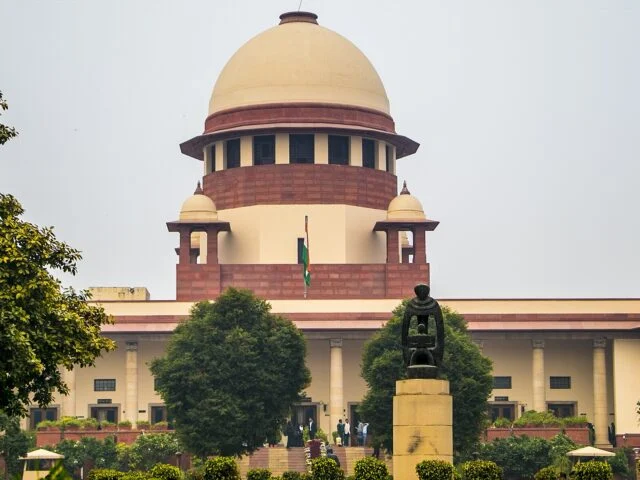
Image: Supreme Court of India building / Wikimedia Commons
The Supreme Court on Tuesday, 27 October, issued notice on a plea asking whether a legislator who resigns voluntarily and then re-contests the bye-election should have to put down a security to cover its cost. A bench of Chief Justice Surya Kant and Justices Joymalya Bagchi and V Mohana heard advocate K Suthan’s appeal against a Madras High Court order that dismissed his petition, LiveLaw reported. Senior Advocate Shoeb Alam appeared for him, in K Suthan v. Union of India (SLP(C) 36231/2026).
Notice to Centre, Election Commission and Resigned MLAs
The Court has asked for responses from the Union, the Election Commission of India, the Tamil Nadu Chief Electoral Officer and certain MLAs who resigned and sought re-election in bye-elections. The petition raises two questions. One is whether a security taken at nomination, refundable if the candidate wins and forfeited if the candidate loses, is a regulatory condition like the deposit under Sections 34 and 158 of the Representation of the People Act, 1951, rather than a disqualification under Article 191. The other is whether the public trust doctrine covers the electoral mandate and the public money spent securing it. LiveLaw did not report any interim order.
Why the Madras High Court Said No
Suthan had asked the High Court to direct the Election Commission to frame an “Election Expenditure Security” and to bar legislators who resign without compelling reason from contesting for five years. A bench of Chief Justice Sushrut Arvind Dharmadhikari and Justice G Arul Murugan dismissed the plea in September, Verdictum reported. It held that the right to resign is part of the constitutional scheme and “cannot convert an executive or legislative option into a judicial command.” The petition also named six individuals, and the Bench said a scheme aimed only at them would conflict with Article 14. Suthan’s own affidavit accepted that such a mechanism is not part of electoral law.
Also read Trinamool Symbol Dispute: Supreme Court Gives Factions 20 Days
No Hearing Date Reported
The Supreme Court has not been reported to have fixed a next date. Any such security would need either a court direction or an amendment by Parliament; the High Court said the second route was the proper one. Related reading: the Election Commission’s affidavit in the Supreme Court and our Daily Updates section.
Source: Madras High Court judgment in K Suthan v. Union of India. Also based on reporting by LiveLaw, Verdictum and Bar & Bench.
Image: Supreme Court of India building / Wikimedia Commons.
Get IPB News first