New terror law in the Philippines can be a path to authoritarianism
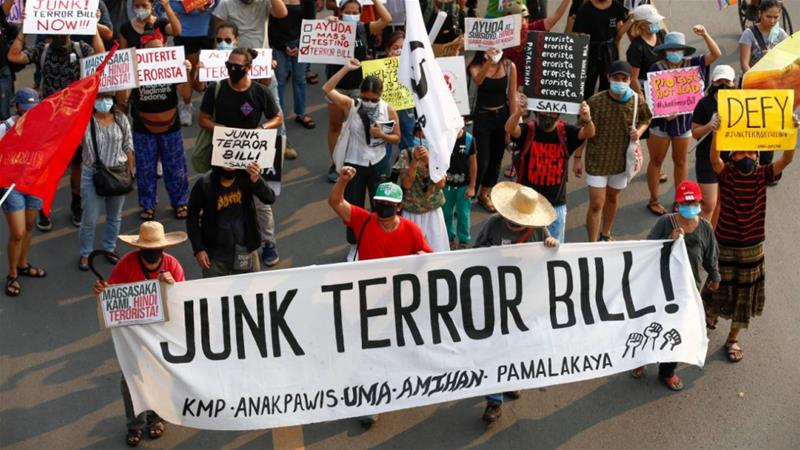
On July 3rd, Rodrigo Duterte, Philippines ’ President introduce the “Anti-Terrorism Act of 2020”. This law replaces the Human Security Act of 2007. The law uses a vague definition of terrorism and permits warrantless arrests. This gives the power to apply detention without charge for up to 24 days, and 60 days of surveillance and wiretaps that can also be extended by up to 30 days, by the police or military.
It will be implemented later this month. An anti-terrorism council is appointed by the president under the law, which will have the power to designate individuals and groups as terrorists and detain them without charge.
The Act defines terrorism as:
- Engaging in acts intended to cause death or serious bodily injury to any person or endangers a person’s life.
- Engaging in acts intended to cause extensive damage or destruction to a government or public facility, public place, or private property.
- Engaging in acts intended to cause extensive interference with, damage, or destruction to critical infrastructure.
- Developing, manufacturing, possessing, acquiring, transporting, supplying, or using weapons.
- Releasing dangerous substances or causing fire, floods, or explosions when the purpose is to intimidate the general public. Create an atmosphere to spread a message of fear, provoke, or influence by intimidation of the government or any international organization. Seriously destabilize or destroy the fundamental political, economic, or social structures in the country, or create a public emergency or seriously undermine public safety.
Six petitions have already been filed in the supreme court against the law. Human rights group says the law could be used to lock up peaceful critics and may even limit access to humanitarian aid. People who make social media posts critical of the government can be detained because the law is broad enough to permit the detention. Activists, opposition, dissenters and human rights defenders will easily be targeted.
Edre Olalia, of the National Union of Peoples’ Lawyers, said – “It is unprecedented to give so much power to executive bodies. The definitions in the law are so expansive and broad that even legitimate activity can be considered terrorism”.
The law is currently being challenged in the supreme court.
For more in-depth analysis click here. Also for more related news updates click here.
Update by Drishti Badole
News source – The guardian and amnesty.