Delimitation 2026: What the Seat-Redrawing Fight Means for States
A constitutional amendment failed in April, the seat freeze still stands, and the south fears losing its share. Here is what is known and unanswered.
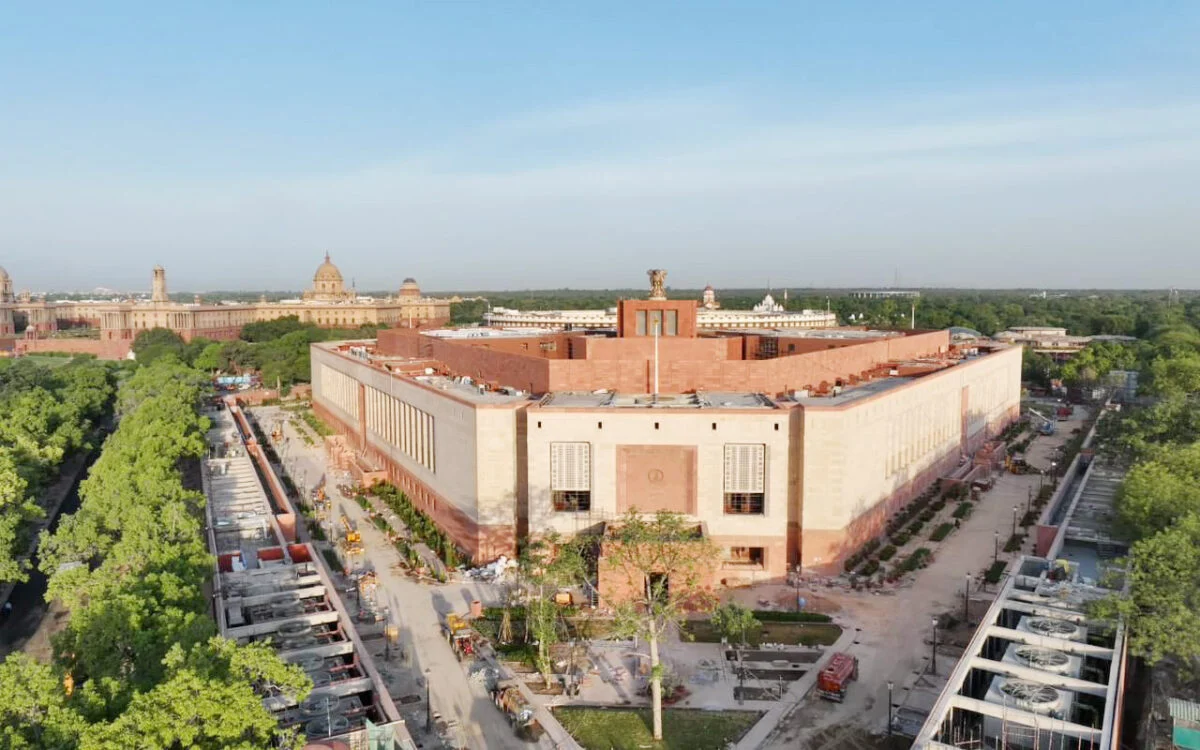
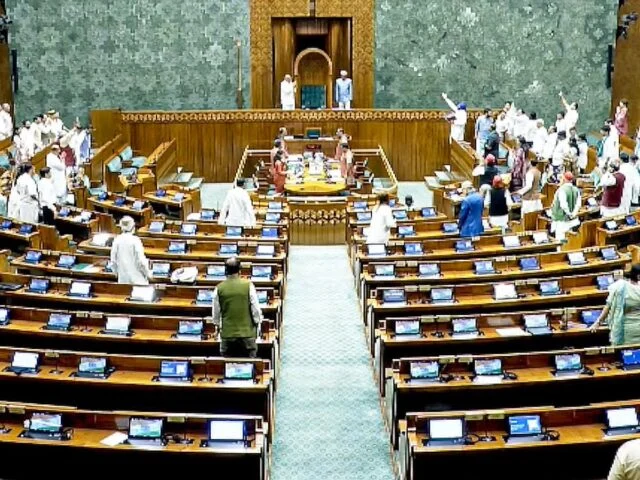
Image: Ministry of Parliamentary Affairs (GODL-India) / Wikimedia Commons
The Lok Sabha will not get more seats, and no state’s share will change, unless Parliament passes a new constitutional amendment, because the one the government brought in April failed on 17 April by 298 votes to 230. That leaves the seat freeze in place and the question of delimitation, the redrawing of constituencies after a Census, open as the Census itself gets under way. This explainer sets out what the failed bill proposed, what the opposition wants instead, which states stand to gain or lose, and what neither side has answered.
The Freeze That Is Still Law
Seats in the Lok Sabha are meant to follow population, and the Constitution says they are readjusted after each Census. That has not happened for decades. The 42nd Amendment in 1976 froze each state’s seat total on the 1971 Census, and the 84th Amendment in 2001 extended the freeze until the first Census after 2026, according to PRS Legislative Research’s note on the bill. States that slowed their population growth, mostly in the south, were not penalised in Parliament. Census 2027 is the first one that can lift the freeze: its population count has a reference date of 1 March 2027, with Phase II enumeration in February 2027, Business Standard reported. No date for publishing the results has been announced.
What the April Bill Proposed
Law Minister Arjun Ram Meghwal introduced the Constitution (131st Amendment) Bill, 2026 in the Lok Sabha on 16 April, with a companion Delimitation Bill. According to the PRS summary, it would have raised the maximum Lok Sabha strength from 550 to 850, with states getting up to 815 seats and Union Territories up to 35. It would have lifted the freeze on state seat shares and let Parliament decide by law when delimitation happens and which Census it uses. The companion bill used the latest published Census, which PRS says points to 2011. It also removed the condition tying the one-third women’s reservation passed in 2023 to a post-Census delimitation, so the quota could start with the next redrawing.
Also read Winter Session 2026: No Dates Yet as Opposition Questions Centre
The bill itself carried no state-wise table. Home Minister Amit Shah told the House that southern states would go from 129 of 543 seats to 195, a gain of 66, News on AIR reported. A Carnegie Endowment analysis noted that this assurance was never written into the bill. The Wire reported that neither the 50% rise Shah and Meghwal described nor the “no change in proportions” Prime Minister Narendra Modi promised appears in the text.
Deccan Herald reported that the debate ran about 23 hours over two days with 123 speakers. The bill needed a two-thirds majority of members present and voting. It got 298 votes against 230, and YSR Congress voted with the government. The ISAS-NUS researcher Ronojoy Sen wrote that the entire opposition united against it and that most opposition parties would have backed the women’s quota if it had not been tied to delimitation.
Why the South Reads the Numbers Differently
Estimates of who gains differ by method, and no official allocation exists. The Hindu’s calculation, reported by The Wire, distributes 815 state seats by 2011 population. Tamil Nadu would go from 39 to 50 seats, but its share of the House would fall from 7.18% to 5.88%. Kerala would move from 20 to 23, with its share dropping from 3.68% to 2.7%. Uttar Pradesh would jump from 80 to 138 and Bihar from 40 to 72. The south’s combined share would drop from 24.3% to 20.7%, while the Hindi heartland’s would rise from 38.1% to 43.1%. The Carnegie Endowment, using a different method, found that Kerala, Tamil Nadu and Andhra Pradesh together would lose 15 seats on 2011 population and 21 on 2026 projections.
That is why Tamil Nadu’s chief minister called the plan a “massive historic injustice” and Kerala’s described it as a “sword of Damocles”, as Carnegie recorded. A state can gain seats and still lose weight in a House that grows faster elsewhere. Union ministers say no state will lose out; the opposition says a promise made in the Lok Sabha is not a clause in the law.
Four Demands, Four Letters
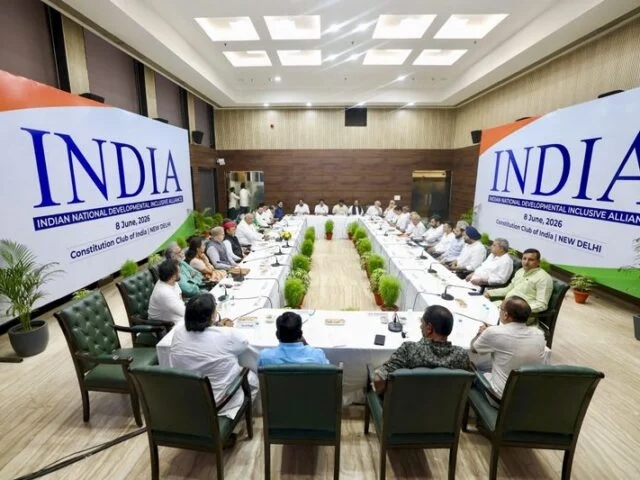
The opposition’s alternative is Congress’s four-point formula, as Jairam Ramesh set it out: keep the Lok Sabha at 543 seats, keep the present state-wise distribution, reserve one-third, or 182, seats for women at once, and freeze all three for 25 years. Ramesh says the DMK and NCP (Sharadchandra Pawar) are “on the same page”. The Open Press carried that account on 21 November; IPB has not seen a formal INDIA bloc resolution adopting it.
Mallikarjun Kharge wrote to Modi asking for an all-party meeting on 11 April, 16 July and 27 August, according to Outlook and ANI. Ramesh says a fourth letter followed on 16 October; IPB could not confirm that date independently. On 25 November Ramesh said the four letters had not drawn “even a routine acknowledgement”, as IPB reported in its story on the claim. Parliamentary Affairs Minister Kiren Rijiju wrote to Kharge on 19 October that the government had consulted the DMK, SP, Shiv Sena (UBT), YSR Congress, NCP, AIMIM and BJD, that Congress gave no dates for talks, and that he had written to Kharge on 16 March, 26 March and 12 April. IPB covered that exchange in the earlier report on Rijiju’s reply. Rijiju also said he hoped Congress would play a “constructive role” on future legislation.
Parliament Waits, 103 Days On
Both Houses were adjourned sine die on 13 August and have not been prorogued. Millennium Post reported on 25 November that this was day 103, above the 25-year average of 95 days and 102 days in 2025, with no Winter Session dates announced. Ramesh has questioned the Centre on the gap and on delimitation numbers; IPB set out his case in its report on the 100-day mark. Congress’s other campaigns are on the Congress tag page.
What Neither Side Has Said
Five things remain open. The government has not published a state-wise seat table. It has not said whether it will bring a revised bill, or when. It has not said whether the Census results due after March 2027 will be the base. The opposition has not said how it would unfreeze the numbers once 25 years pass. And no all-party meeting has been called, despite four requests. The next marker is the Winter Session notification, which the government has not yet issued.
Source: PRS Legislative Research, Constitution (131st Amendment) Bill, 2026 tracker and its bill summary. Also based on reporting by Deccan Herald, The Wire, Carnegie Endowment, ISAS-NUS, Outlook, Business Standard, Millennium Post and The Open Press.
Image: Ministry of Parliamentary Affairs (GODL-India) / Wikimedia Commons.