India is no more a country of ‘Missing Women’
The latest national family and health released by the health ministry on Wednesday recorded 1020
women per men. It happened for the first time that women were more than men. Also, the birthrate in
the second most populated country is slowing down according to government data
The daughter was considered to be a burden and still in many parts of India they are burdensome even
today. The preference for son is more, as they say, the son brings money. It’s because of the tradition of
wedding dowries. Even if it is banned and considered to be a criminal offence, they manage to ask
for dowries without using the word but as a gift. Hence this gave rise to sex selected abortion. In
1996 parental sex determination was banned in India to ban sex selected abortion.
And as the scenario is changed and the sex ratio has been improved we can say that India is changing.
Now India no longer will be called a country of ‘Missing Women’. This phrase was first used by
Nobel prize-winning economist Amartya Sen in a 1990 essay in New York reviewed the book. When this
phrase was first used there were only 927 women per 1000 men in India.
It clearly states that the measures are taken to tackle with sex selected abortion, female foeticide
and neglect of girls and women.
But the gender ratio at birth still remains at 929 women per 1000 men, which shows that the issue of
sex-selection abortion and female foeticide has not been eliminated completely and still the
preference for son is more.
It is observed that in Rural parts of India female-male ratio is far better than in urban parts. This is
because people have access to sex-selective abortion due to access to technology than rural areas.
| URBAN | 985 |
| RURAL | 1037 |
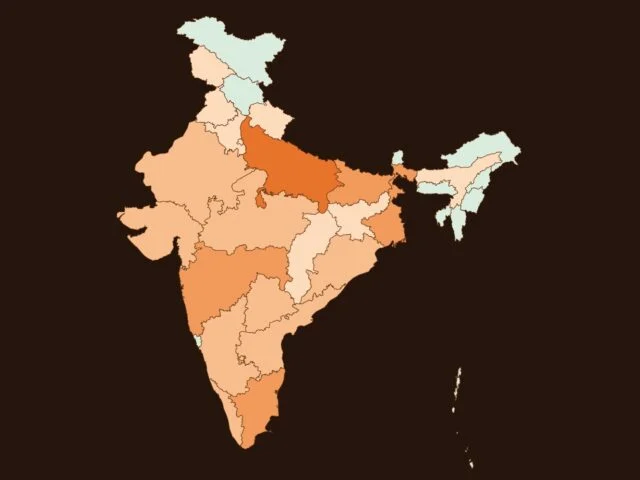
- Area having low sex ratio
- Himachal Pradesh
- Jammu & Kashmir
- Chandigarh
- Ladakh
- Area where the sex ratio showed improvement
- Delhi
ANOTHER INTERESTING READOUT OF THE SURVEY
- We are now the aging population.
- The total fertility rate, which is the average number of children per women is 2.
- The NFHS-5 shows a reduction in stunting, which is an indicator of chronic undernutrition from 38.4% to 35.5%.
- Uttar Pradesh, Bihar and Jharkhand still need an improvement in fertility reduction.
What the 1,020 figure left out is examined in India’s missing women, a Third Eye story on India People Blog.
Click here to read more in-depth-analysis

Shraddha Nagwekar
Junior Reporter