Christa Pike Survived Tennessee’s Execution Attempt. What Comes Next?
On September 30, the US state of Tennessee tried to execute Christa Pike, the only woman on its death row, for a murder she took part in at the age of 18. She survived. Two doses of the barbiturate pentobarbital failed to kill her, and more than an hour into the attempt the chamber’s microphone was switched off while she was still breathing and snoring, the Nashville Banner and ABC News reported. Eighteen days later, Pike is back in prison, executions in Tennessee are on hold, the state’s prisons chief has resigned, and lawyers are arguing over a question American courts have rarely had to answer: can a state try to execute someone again after it has failed once?
The 1995 Case

On the night of January 12, 1995, Pike, then 18, and her boyfriend Tadaryl Shipp, 17, lured a 19-year-old fellow student at the Knoxville Job Corps centre to a University of Tennessee agricultural campus on the pretext of smoking marijuana, and killed her there, according to court records reported by WBIR and other outlets. A third student, Shadolla Peterson, pleaded guilty to being an accessory after the fact, cooperated with prosecutors and received probation.
Pike was the only one of the three sentenced to death. Shipp was too young for a death sentence under US law and received life in prison with the possibility of parole, plus a consecutive 25-year term; he was denied parole in October 2025 and his case will next be reviewed in 2031, 13News Now and Yahoo News reported. Pike has spent about three decades on death row. Her clemency petition to Governor Bill Lee cited severe trauma, untreated mental illness and abuse she suffered as a child. On September 28, Lee denied clemency without giving reasons beyond saying he had reviewed the case and would uphold the sentence, the Death Penalty Information Center and Fox17 reported. Pike would have been the first woman executed by Tennessee in more than 200 years.
What Went Wrong on September 30
Most of the detail about what happened inside the chamber comes from Pike’s lawyers, and the state has not yet publicly explained the failure. Her attorneys say the intravenous lines were misplaced, so the drug went into the tissue of her arm rather than into her bloodstream, and that the team gave a second dose instead of fixing the problem, PBS NewsHour and CNN reported. One of her lawyers, Randy Spivey, said he counted at least seven needle marks in her left arm, and her lawyers said her arms were swollen, burned and blistered when she reached hospital. They said they had warned the state in advance about the difficulty of finding a vein.
Media witnesses reported that Pike snored and moaned but kept breathing. She was taken to Vanderbilt University Medical Center in critical condition and placed on a ventilator, and her lawyers did not expect her to survive. She regained consciousness about a week later, and by October 9 was walking with help and eating, NPR reported. She was discharged and returned to prison on October 10, CNN reported. As of October 8, her lawyers said she was struggling with memory and concentration, and that it could take months to know whether the drugs caused lasting brain damage.
The Tennessee Department of Correction said it had followed every step of the state’s lawful, established execution protocol. Days later, a Texas inmate, Jamaal Howard, was executed with the same drug and died within about 19 minutes, CNN reported, a contrast that fits her lawyers’ account that the problem lay in how the drug was given rather than in the drug itself.
A Second Failure in Five Months

Pike’s was Tennessee’s second failed execution of 2026. On May 21, the state called off the execution of Tony Carruthers after officials spent more than an hour trying to set up an intravenous line; the governor later granted him a one-year reprieve, NewsNation and CBC reported.
After Pike’s failed execution, Governor Lee halted all remaining executions for the year, including one scheduled for December 3, and appointed former US Attorney Ed Stanton to lead an independent review of the state’s lethal injection protocol. Corrections Commissioner Frank Strada resigned, saying it was “in the best interest of Tennesseans” while the review was carried out, CNN reported. On October 7, a judge ordered the Department of Correction to preserve all evidence from the attempt, NPR reported, a step that matters for any future lawsuit.
Can Tennessee Try Again?
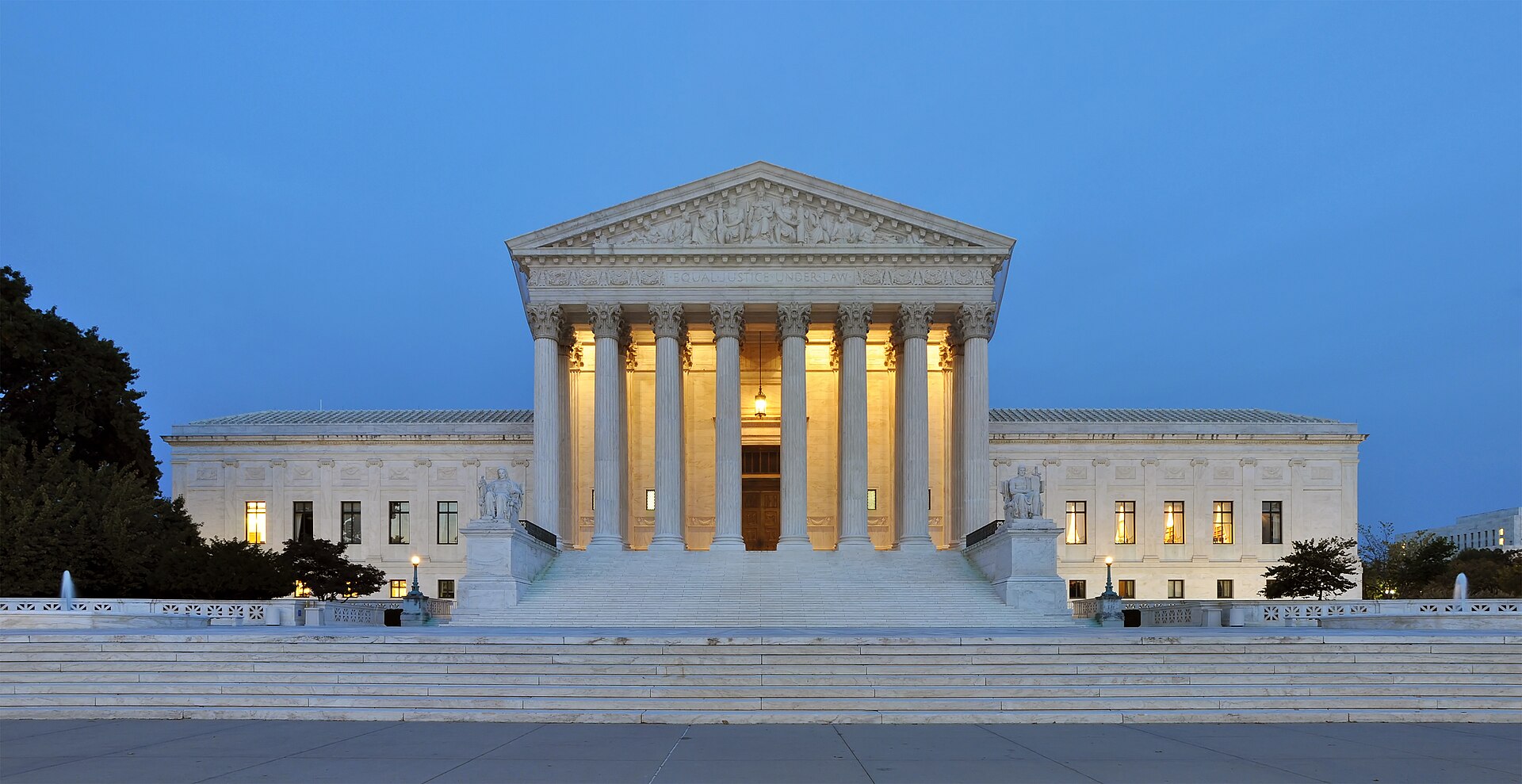
No new execution date has been set. The central legal precedent is a 1947 US Supreme Court case, Francis v. Resweber, in which the court allowed Louisiana to try a second time to execute Willie Francis after the electric chair failed to kill him. On that reading, a second attempt is not automatically barred by the Eighth Amendment, which prohibits “cruel and unusual punishments”.
But legal experts quoted by CNN, NewsNation and WKRN point out that the Supreme Court decided Francis decades before it adopted its modern test of “evolving standards of decency”, and has never revisited the question. To block a second attempt, Pike’s lawyers would likely need to show that it would add pain or terror beyond what an execution normally involves. Law professor Bernard Harcourt has argued that after “this traumatic experience”, anything more would violate the Eighth Amendment. Robert Dunham, a death penalty expert, said Pike had suffered “pain that is not incidental to a lethal injection gone right”. A double jeopardy argument, that she cannot be punished twice for the same crime, is considered weaker because earlier rulings stand in the way.
There is also a more immediate hurdle. Under US law, a prisoner must be mentally competent to be executed, meaning they must understand that they face execution and why. If the drugs damaged Pike’s memory or cognition, she may first have to be evaluated, a process her lawyers say could take months.
Why the Case Matters Beyond Tennessee
The Pike case has become a test of lethal injection itself, a method adopted across the US because it was presented as more humane than hanging, the electric chair or the gas chamber. Two failed executions in one state in one year, both apparently linked to problems in placing intravenous lines, will strengthen arguments by defence lawyers elsewhere that states cannot reliably carry out the procedure without causing suffering. The outcome of Stanton’s review will shape whether Tennessee resumes executions in 2027.
The case also raises questions about how the justice system treats young offenders and women with histories of severe abuse. Pike was 18, one year older than the co-accused who was legally barred from receiving a death sentence. Advocates such as the Cornell Center on the Death Penalty Worldwide have stressed that she was a teenager with a history of childhood abuse, while local coverage, including a WBIR retrospective, has stressed that the passage of time does not lessen the brutality of the crime.
How India Compares
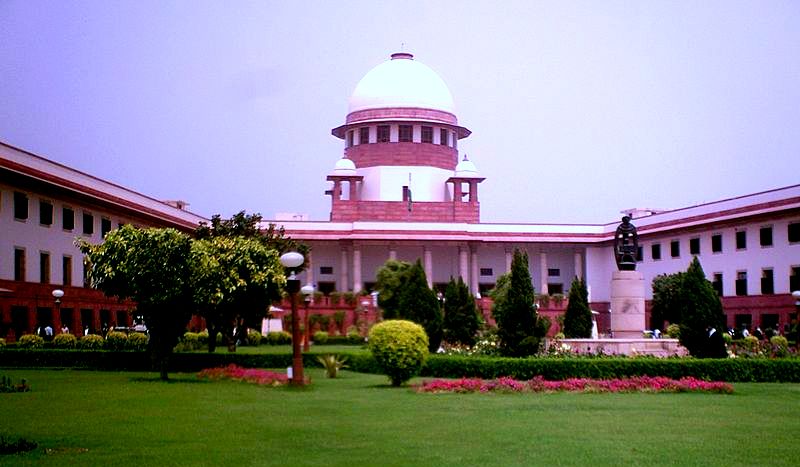
India retains the death penalty but carries it out by hanging and rarely. Since its 1980 judgment in Bachan Singh v. State of Punjab, the Supreme Court has held that death should be imposed only in the “rarest of rare” cases, and India’s most recent executions on record took place in March 2020, when four men convicted in the 2012 Delhi gang rape and murder case were hanged. In 2023, the Supreme Court asked the Centre for data on whether there were less painful alternatives to hanging, a debate that the failures of lethal injection in the US are likely to inform. Read more of IPB’s In-depth Analysis and the day’s news in Daily Updates.
Based on reporting by NPR, NPR (evidence order), NPR (recovery), CNN, CNN (Strada resignation), CNN (legal questions), CNN (Texas comparison), Nashville Banner, ABC News, PBS NewsHour, Death Penalty Information Center, Fox17, WBIR, 13News Now, NewsNation, NewsNation (Eighth Amendment), CBC , WKRN and the Cornell Center on the Death Penalty Worldwide.
Images: California Department of Corrections and Rehabilitation, Joe Ravi and other contributors / Wikimedia Commons.