To Empathize: Mission Impossible?
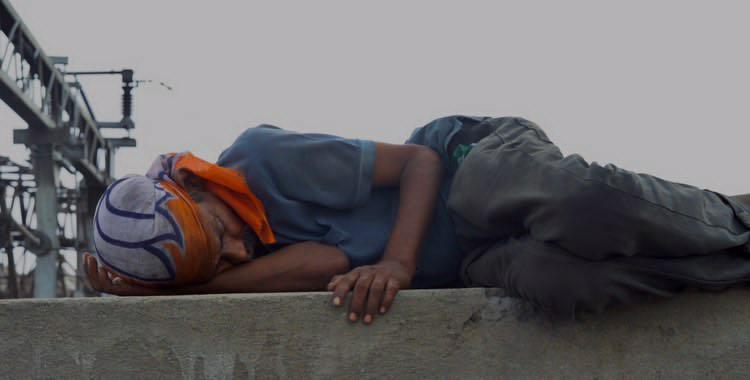
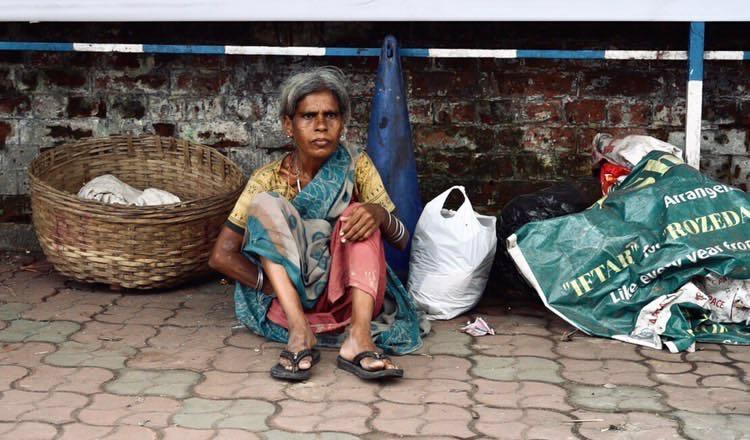
There is a major need for reform in the way we think about the people from the liminal threshold of this society. We, as citizens, have failed to care about them most of the times in the past. We need to introspect the way we perceive them. During this pandemic, the apathy towards the distress of these migrants and economically backward citizens of the society is causing an onslaught on humanity. It is imperative we look at this in a more sensitive way rather than attacking them with our devoid questions. The migrants who met with an accident and succumbed to it in many states were bombarded with many why’s. Why they were walking to their states, why they were sleeping on tracks, why they wanted to go home. Many homeless spent multiple nights in public toilets, some tried reaching their destination by adjusting in concrete mixers, some did not stop walking with their kids and belongings on their shoulders and some just lost their hopes on the way. Many citizens and stalwarts came up to help them but some of our privileged friends kept pointing at them for their own sufferings with a plethora of conjectures.
Probably this kind of behavior is not alien to us if we retrospect into our daily (pre-COVID) lives. For example, we see many people prioritizing clicking pictures and recording videos (trying to be a journalist at the Whatsapp University) of road accidents or any public mishap rather than helping in the first place. This is a very basic example but shows the condition which today’s empathy lies in. The same way we have involved ourselves in this complicit activity of blame game on the migrants. In this whole episode of the migrant crisis, the Central government is blaming state governments and we are blaming the migrants. As the whole world is in the process of finding a deterrent to this deadly virus, we should work from home to find a deterrent to this human insensitivity.
I see many people confronting on twitter about the ‘intellectuals’ not acknowledging the problems faced by the middle class amidst the crisis. Even I came across this confusion that are we missing out on the problems of the middle class citizens? But someone on my twitter feed enlightened me on this question. The tweet consisted of a long thread, of which I will quote the answer I got to my question. It goes like- “ Sure, middle class suffers. But there are some peculiar things about that suffering. The first one is the most obvious one- the suffering is mostly a reduction of privilege. Having to use one car instead of two. Having to rely on a scooter instead of a car. Having to go to a shop instead of a mall. It is often not a life and death situation. It is more like an inconvenience”. The twitter id name was ‘words are weapons’. Surely his tweets (words) helped me as a weapon and often shape my thoughts in a good manner.
Also, we cannot forget the most important institution of the country that showed reluctance towards solving the issue of these migrants. The Supreme Court. In the absence of an articulate response, to the PIL’s filed regarding the migrant crisis, from the supreme court, two high courts, Madras High Court and Andhra Pradesh High Court came up and ruled out some guidelines for the respective states to handle this issue. From the unwillingness of the Supreme Court to interfere in the Kashmir issue to the ignorance in the problems of migrants, it has not disappointed us so well. When the PIL’s were probed by the judges, Chief Justice SA Bobde gave a statement that why the migrants need money if they have been provided with food?. It is obvious that the migrants are deficient in other resources than food and it is not the sole savior of the migrants.
We privileged have not suffered an ounce of what the poor migrants have gone through in this span of more than 4 weeks of lockdown. The media, as described by PM Narendra Modi- one of the frontline warriors during this pandemic- has played an important role in helping out these people in crisis. Many journalists are seen offering help to these delocalized people during this imbroglio. A BBC journalist was seen offering his own shoes to a barefooted migrant, whereas many freelance journalists are providing ration and transport for these helpless people. But the most potent contribution of these journalists is perhaps the reporting on the misery of these brave migrants walking thousands of kilometers. Their reporting has made all the governments take action on this crisis incessantly.
Those cries with skeptic hopes of reuniting with the kin are worrisome. I wonder if this period of the misery of migrants will be embodied in our memory, so that next time we choose our government wisely and hold them accountable for such a humanitarian crisis. But, public memory, as the cliche goes, is short.