Odisha Agri-PV Policy 2026: 1 GW Target, 90% Land Kept for Crops
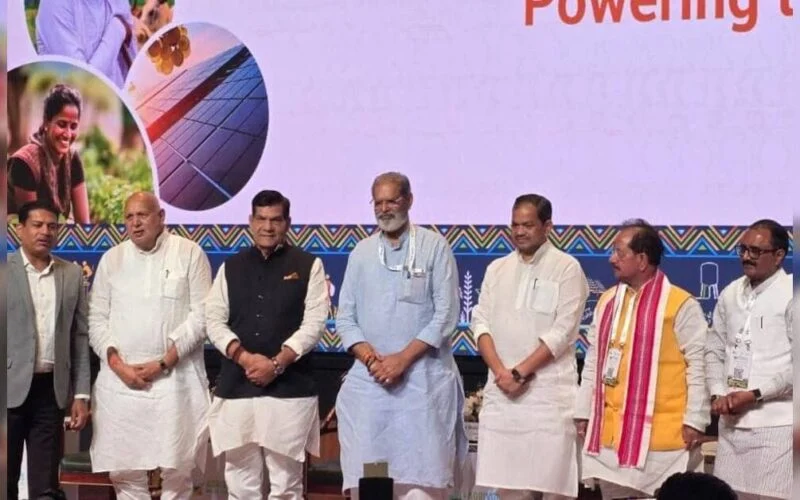
Image: Business Standard
Odisha will bring out India’s first state policy dedicated to agrivoltaics, the practice of growing crops and generating solar power on the same land, Deputy Chief Minister Kanak Vardhan Singh Deo said on Thursday, 22 October. Speaking at the 7th Agrivoltaics World Conference at Bharat Mandapam in New Delhi, he said the Agri-PV Policy 2026 aims for 1 GW of capacity by 2030. The policy is still being finalised, according to Business Standard and other reports.
Farmers Keep the Crop and Earn From Power
Under the proposed policy, at least 90% of a project’s land must stay under active cultivation, which separates it from ordinary ground-mounted solar. Land used for such projects keeps its agricultural status, and farmers remain eligible for crop insurance. Farmers can either invest in and own the systems, earning from both crops and electricity, or partner with solar developers for long-term lease rent. Singh Deo said the aim is to move farmers “from Annadata to Urjadata”, from food provider to power producer. Reports do not give subsidy amounts.
25-Year Contracts With GRIDCO
For developers, the policy offers 25-year power purchase agreements with the state utility GRIDCO, along with guaranteed offtake, grid connectivity and open-access rights. It also links projects to existing farm schemes such as drip irrigation, solar pumps, cold storage and agro-processing. A 1 MW agrivoltaic project is already under implementation, and a pilot with Singapore’s Nanyang Technological University is planned to test newer technology.
The state says it has about 4.07 million acres of cropland suitable for agrivoltaics and another 4.77 million acres of fallow land. In February 2026, Odisha received clean energy investment commitments of Rs 67,000 crore for projects totalling 6.8 GW at its renewable energy investor conclave.
Policy Text Still to Come
No date has been announced for the policy’s formal release or cabinet approval. Singh Deo invited research institutions, private investors and other states to collaborate on it.
More stories on energy and governance are in the Daily Updates section.
Source: Based on reporting by Business Standard, UNI and Pragativadi. No official policy document was available at the time of writing.
Image: Business Standard.