Pumped Storage Potential: CEA Maps 345 GW Across 320 Projects
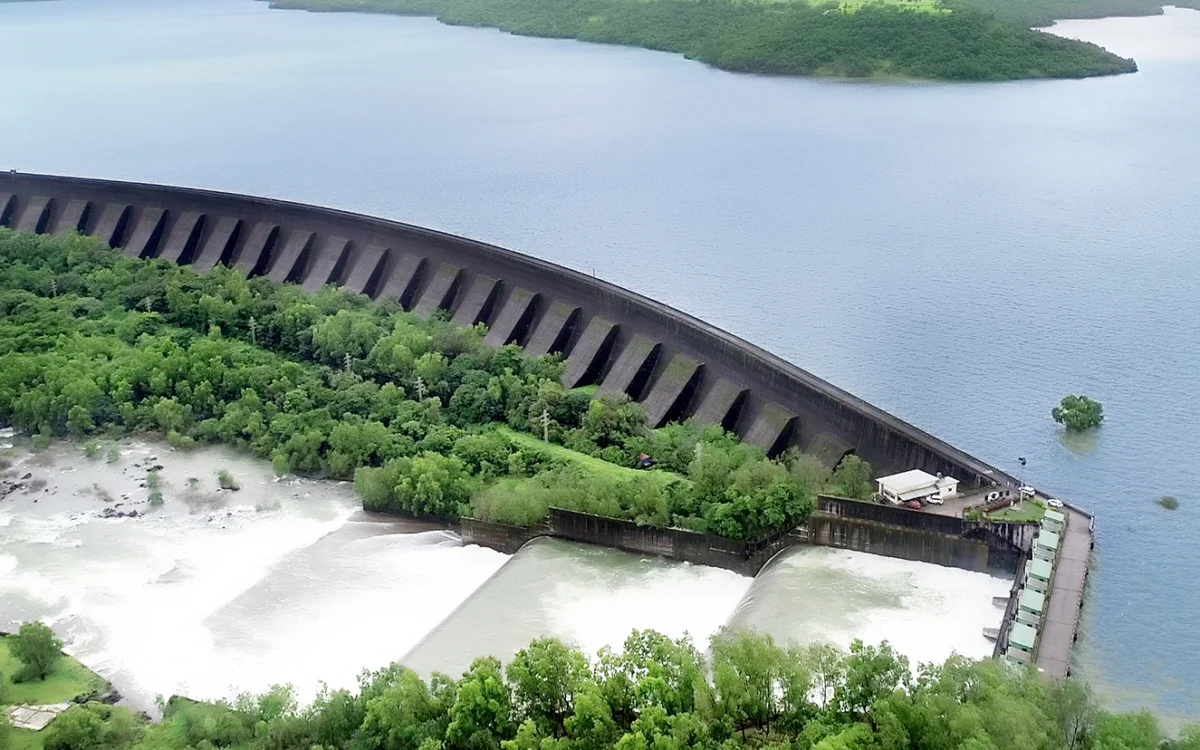
Image: Tata Power
India has identified 345.38 GW of pumped storage hydropower potential across 320 sites, the Central Electricity Authority (CEA) has said, according to a Press Information Bureau note published on 19 October 2026. Only 7.43 GW across 10 projects is operating as of August 2026. Pumped storage plants pump water uphill when power is cheap and release it through turbines in the evening, so the figures matter as solar and wind take up a larger share of the grid.
Evening Peak Is the Pressure Point
The PIB note says growing solar and wind output raises the need for storage that can balance supply and meet the evening peak. Storage of this kind improves grid flexibility, it says, and helps the grid absorb more renewable power. The note does not give a figure for what any of this means for household bills.
Western India Holds the Largest Share
Of the 320 projects, 62 are on-stream schemes with 56.67 GW of potential and 258 are off-stream schemes with 288.71 GW, The Tribune reported from the CEA data. By region, the west leads with 129.72 GW, of which Maharashtra accounts for 67.36 GW and Gujarat 33.36 GW. The south has 97.76 GW, the east 53.41 GW (41.53 GW of it in Odisha), the north 50.32 GW and the northeast 14.18 GW.
Globally, pumped storage stood at 159.8 GW at the end of 2025, according to the International Renewable Energy Agency (IRENA). India ranked fourth with 7.18 GW, behind China, Japan and the United States.
Targets Run to 2035–36
The CEA estimates India will need 73.93 GW of storage by 2031–32: 26.69 GW from pumped storage and 47.24 GW from batteries. Another 15.87 GW across 11 projects is under construction or implementation, and 10.40 GW across eight projects has been concurred or appraised by the CEA. The CEA roadmap expects 100.81 GW to be commissioned by 2035–36, taking the total to about 105.56 GW. India has crossed 300 GW of non-fossil capacity, as of July 2026, and aims for 500 GW by 2030.
To speed this up, the government notified development guidelines in April 2023 and competitive bidding guidelines in February 2025. Projects awarded for construction by 30 June 2028 get a 100% waiver of inter-state transmission charges for 25 years, and the CEA has cut its detailed project report concurrence time from 90 days to 50. For the power sector’s other numbers this month, see September core sector growth, and more on the economy in Economy.
The note does not say which of the 11 projects under construction will be commissioned first.
Source: PIB Research explainer, Pumped Storage Hydropower. Also based on reporting by The Tribune and ANI via LatestLY.
Image: Tata Power.