India-China Face-Offs in Arunachal: ITBP Chief, MEA Remarks Explained
Face-Offs Confirmed, Details Withheld
- ITBP Director General Shatrujeet Kapur told troops in Alwar on 22 October that India-China face-offs in Arunachal had taken place at several locations and were still going on.
- A day later, the MEA said the border situation is disturbed from time to time when Chinese forces depart from established patrolling patterns. It sent questions on specifics to the Defence Ministry.
- Kapur said India may now find it hard to match China by traditional means, and that drones let a smaller force take on a bigger one. Of a Rs 400 crore grant to the force, 70% has been set aside for drones.
- Neither statement said where the face-offs are, when they began, or whether Indian patrols have lost access anywhere.
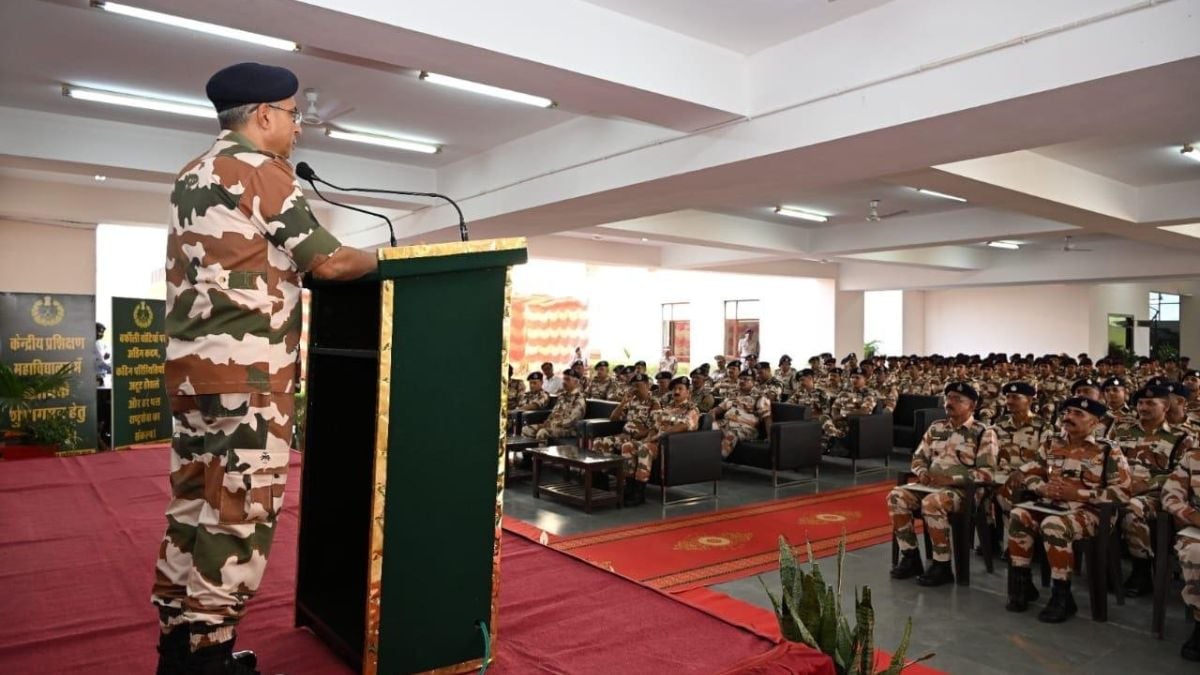
Nine days before he retires, the chief of the force that guards India’s 3,488-km frontier with China stood before his troops at the ITBP’s Central Training College in Alwar, Rajasthan, and put on record what officials had played down since July. Indian and Chinese troops, Director General Shatrujeet Kapur said on Thursday, 22 October, had faced off at several places in Arunachal Pradesh, and the face-offs were continuing. On Friday, the Ministry of External Affairs (MEA) answered questions on his remarks without confirming or denying the details. Read together, the two statements are the clearest official sign so far that the India-China face-offs in Arunachal, reported by local groups for months and denied by officials, are real and unresolved.
Kapur went further than confirming friction. In the same speech he said India may now struggle to match China’s army by traditional means, and that drones are how a smaller force can hold its own. It is a blunt thing for a serving force chief to say in public, and he put money behind it. Below: what each side said, what neither said, the denials that came first, and how well Kapur’s examples from Ukraine and Iran stand up.
What Kapur Told His Troops in Alwar
Kapur was speaking at the Himveer Samman Samaroh, the force’s yearly ceremony to honour its personnel, held ahead of the ITBP’s Raising Day on 24 October. He credited the force’s newly raised Shaurya commandos for their work in the face-offs, which happened at several places in Arunachal in recent days and “still continues”, he said, according to The Hindu.
Also read China Visa for Indians: Applications Move to Embassy From Oct 26
Then he turned to China’s military. “Competing with China through traditional methods may now be difficult,” he said in Hindi. China had invested heavily in the People’s Liberation Army (PLA) and its border defence regiments and modernised them, “so they have moved far ahead”. His answer was the drone. “A drone is something with which a relatively small force, even a small country, can give a big country a tough fight,” he said. “The role of our traditional armed forces has now changed.” (Quotes translated from Hindi by IPB News.)
The MEA’s Reply, and What It Left Out
At the weekly briefing on Friday, 23 October, MEA spokesperson Randhir Jaiswal was asked about Kapur’s remarks. “In so far as specifics are concerned, I would refer you to the Ministry of Defence,” he began. The situation in the border areas gets disturbed “from time to time”, he said, when Chinese forces “diverge from established patrolling patterns”. Both sides, he added, were using existing diplomatic and military mechanisms to avoid “misunderstanding and miscalculation” along the Line of Actual Control (LAC).
One line in his answer is easy to miss. The two sides “have also agreed to discuss ways to improve understanding of LAC in appropriate areas for better border management”, Jaiswal said. That is an admission that India and China do not read the line the same way in some places, which is the reason government sources gave in August for patrols running into each other. He closed on peace in the border areas being essential for the wider relationship, a point the MEA also made in August, when it said the state of the border would reflect on the state of ties.
What the MEA did not say matters as much. It named no place and no date, and did not say whether Indian patrols have been stopped from reaching any point they used to visit. The ITBP reports to the Home Ministry; the Corps Commander talks with China are held by the Army, which comes under the Defence Ministry, where the MEA sent the questions.
From ‘Without Any Basis’ to ‘Still Continues’
The friction centres on the Taksing circle of Upper Subansiri district, near the Asaphila area on the LAC. In late June, the Nah Welfare Society, a body of the local Nah community, wrote to the deputy commissioner alleging that the PLA had built roads, bridges and camps on land villagers used for grazing and collecting forest produce. In a statement on the night of 29 June, the Indian Army called such reports “incorrect and without any basis”.
In late July, Indian and Chinese troops came face to face near the Maja company operating base during routine patrolling, government sources told The Hindu. Both sides pulled back after a brief confrontation, but the PLA returned in larger numbers a few days later and pitched tents on higher ground, 6 to 7 km inside the LAC as India sees it, the sources said. India has since increased its own deployment in the area, according to the report.
Officials kept playing it down. On 7 August, Chief Minister Pema Khandu said, “I don’t think incursion happened in Indian territory,” and promised to check with the Army and the Nah community. On 11 August, government sources said there was no slow encroachment by China, and that patrols sometimes face off because the border is not demarcated. On 12 September, Governor Lt Gen (retd) KT Parnaik’s office said some reports had wrongly projected that he had acknowledged an intrusion.
Kapur’s words do not contradict the official line that China has not taken land; he spoke of face-offs, not of territory lost. But they confirm that a confrontation officials treated as rumour in August is active in October, at more than one place.
Three Rounds of Talks Since July
The friction has run alongside a full calendar of talks. On 6 August, officials held the 36th meeting of the Working Mechanism for Consultation and Coordination on India-China Border Affairs (WMCC). On 25 August in Beijing, National Security Adviser Ajit Doval and Chinese Foreign Minister Wang Yi held the 25th round of Special Representatives’ talks. Their eight-point outcome added two more meeting points for senior military commanders and asked an expert group and a working group to advance an “early and substantial harvest” on boundary delimitation and border management.
On 6 September, the two armies held their first Corps Commander-level meeting in the Eastern Sector, at the Vacha-Damai border personnel meeting point in Arunachal. Since the Galwan clash of June 2020, such meetings had mostly been held at Chushul-Moldo in eastern Ladakh. From 11 to 13 September, Chinese President Xi Jinping was in India for the BRICS summit. ThePrint reported that one of the face-offs Kapur referred to took place around the time of that summit.
Two years ago this week, on 21 October 2024, India announced the patrolling arrangement for Depsang and Demchok that ended the last standoffs in eastern Ladakh. Prime Minister Narendra Modi and Xi endorsed it at Kazan two days later. On 29 September this year, External Affairs Minister S Jaishankar said ties are better than they were a couple of years ago. Other strains remain: from 18 November, China will require licences to export tunnel boring machines and some high-altitude construction equipment, which could slow Indian projects. Kapur’s remarks place the present friction far from Ladakh, on the Eastern Sector that the 2024 arrangement did not cover.
The Drone Plan, in Rupees
Kapur put numbers to his argument. The roughly 95,000-strong force has received Rs 400 crore from the government, and 70% of it, about Rs 280 crore, has been set aside for drone warfare, he said, according to PTI. Every border-guarding battalion now has a drone platoon, and the force is training drone pilots and building some drones itself. The Home Ministry has given in-principle approval to a larger modernisation scheme of about Rs 4,000 crore, of which Rs 1,000 crore will go to drone and anti-drone systems.
The rest of his list was about surviving a fight. Some of the ITBP’s weapons are about 50 years old and are being replaced. A new training course, ‘Strike’, meant to prepare troops for Galwan-like clashes, will cover the whole force by the end of 2027. The ITBP knows those clashes first-hand: in 2020, the force said its troops held off PLA soldiers for 17 to 20 hours at places in eastern Ladakh. Under a pilot project, it is also building underground shelters at border locations, because buildings above ground can become targets in a war, Kapur said. Shaurya commandos are to be placed in every border battalion.
Checking the Ukraine and Iran Examples
Kapur leaned on two wars. On Ukraine, he said Russia had expected to take the country in a month or two, that the war was in its fourth year, and that 10,000 to 15,000 Russian soldiers are killed every month. The full-scale invasion began in February 2022, so the war is now in its fifth year. All figures for Russian deaths are estimates, and they differ widely.
The Washington-based Center for Strategic and International Studies (CSIS) estimated in August that Russia suffered 400,000 to 450,000 battlefield deaths between February 2022 and June 2026. That is an average of roughly 7,700 to 8,700 a month, and CSIS put 2026 casualties, counting the wounded and missing, at 30,000 to 34,000 a month. Ukrainian President Volodymyr Zelensky put Russia’s monthly dead at 20,000 to 25,000 in an interview this month. The independent Russian outlet Meduza argued in February that once missing soldiers declared dead years later are stripped out, current deaths likely do not exceed about 600 a day. Kapur’s figure sits inside that range, at neither end.
On Iran, Kapur said it took on the United States with drones, without needing an air force, a navy or an army. The war began on 28 February 2026 with US and Israeli strikes on Iran, and Iran answered with thousands of drones and hundreds of missiles across the region, according to Encyclopaedia Britannica’s account. Iran does have an air force and a navy, and its retaliation relied on missiles as well as drones. The cost gap is the stronger part of Kapur’s case: analysts writing in Foreign Affairs noted that cheap Shahed-136 drones forced the US and its partners to spend heavily on air defences and risk running short of them.
A Veteran’s Doubt and the Opposition’s Questions
Not everyone accepts Kapur’s description. Lt Gen Sanjay Kulkarni (retd) told IANS he did not agree with the DG, described the situation as a “routine patrolling perception” and said the remarks may have been taken out of context.
The Congress read the speech the other way. Party president Mallikarjun Kharge asked whether India’s patrolling access had been compromised and whether India’s pre-May 2020 patrolling rights had been fully restored. “Why is the nation being kept in the dark?” he wrote on X. Congress general secretary Jairam Ramesh said locals had reported that patrolling points had been lost. In August, Kharge had asked whether India had lost regular access to Shera-5, a designated patrolling point near Taksing. No further government response to these questions had been reported by Friday night.
Where Exactly, and Since When
Neither Kapur nor the MEA said where the face-offs are, how many there are, or when the current ones began. It is not known whether the PLA tents reported near Maja are still there, or whether Indian patrols can still reach every point they once did. No statement from the Defence Ministry, to which the MEA pointed reporters, had appeared by Friday night.
The ITBP marks its Raising Day on Saturday, 24 October. Kapur retires on 31 October, and his successor will inherit both the face-offs and the drone programme. The 26th round of Special Representatives’ talks is due to be held in India in 2027. More analysis is on our In-depth Analysis page.
Frequently Asked Questions
What did the ITBP chief say about China?
On 22 October, ITBP Director General Shatrujeet Kapur said Indian and Chinese troops had faced off at several places in Arunachal Pradesh and that the face-offs were continuing. He also said competing with China by traditional means may now be difficult, and that the force is investing in drones.
Where are the India-China face-offs in Arunachal Pradesh?
Officials have not named the places. Government sources told The Hindu that the most prominent standoff has been near Asaphila and the Maja post in the Taksing area of Upper Subansiri district since late July.
What did the MEA say about the ITBP chief’s remarks?
MEA spokesperson Randhir Jaiswal said on 23 October that the border situation is disturbed from time to time when Chinese forces diverge from established patrolling patterns. He referred questions on specifics to the Defence Ministry.
How much is the ITBP spending on drones?
Kapur said 70% of a Rs 400 crore grant has been set aside for drones, and that Rs 1,000 crore of a planned Rs 4,000 crore modernisation scheme will go to drone and anti-drone systems.
Source: MEA weekly media briefing, 23 October 2026; MEA release on the 25th Special Representatives’ talks; MEA release on the 36th WMCC meeting; China’s eight-point outcome of the 25th SR talks. Also based on reporting by PTI / Business Standard, The Hindu, The Wire, ThePrint, Business Standard, NewsDrum, IANS / Telangana Today, Northeast Now, NewKerala, UNI, NewsGram, Outlook, The Shillong Times / IANS, Deccan Herald, Business Standard (Jaishankar), CSIS, Meduza, UA News, Britannica and Foreign Affairs.
Image: ITBP / X.