Economy of coal mining and the known harm
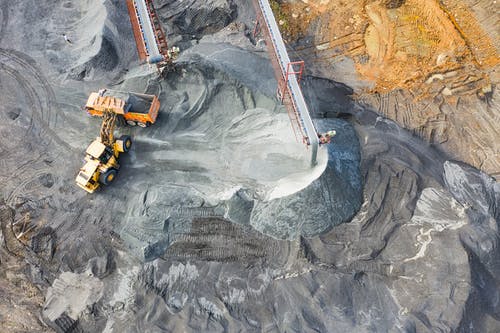
History of coal mining in India
1774 the year discovered as India’s coal area by the East India Company, Raniganj. The power sector is the largest consumer of coal, steel, washery, cement.
Sooner, in 1853 engine trains running over coal were introduced by the Britishers. This made a sudden increase in coal production. Which gave a drastic boost to the coal that is an annual average of 1 Metric million ton.
Simultaneously year by year it reached a high pick that is in 1900 it was 6.74 Mt million ton, in 1920 it went as high as 20 Mt million ton. It was unbelievable but during World War 1 the demand was 30 Mt million ton and during World War 2 it was 33 Mt million ton.
In the year 1971 the then PM Indira Gandhi Nationalized 226 coking coal mines meaning the process of taking privately controlled companies, industries, or assets and putting them under the control of government.
BCCL that is Bharat Coking Coal Limited was formed in 1972. Certainly, in 1975 Coal India Limited was formed with 5 subsidiaries that are the Central Mine Planning and Design Institute, Central Coalfields Limited, Western Coalfields Limited, Eastern Coalfields Limited, and Bharat Coking Coal Limited.
Well development at the sake of what?
The health and environmental impact over the people and the nature of the surrounding has been affected at its worse. In 1965 the disaster at Dhori mines, Jharia coalfields was the worst of all. This explosion killed almost 268 people.
The continuous mining at the place has created a severe situation among the people. Infact the town of Jharia has to be shifted due to the regular increasing pollution and fire at that place.
Coal mining can help certainly to upgrade the economy but at the same place, it will degrade the environment. Well, it is the only fact. In China the Benxihu colliery disaster is beleived to be the worst disaster ever which made to lost 1,549 lives.
The Hindu on Jan 2020 reported that 377 coal miners died in three years. Study beleive that 90% of households in a village nearby coal mines reported health related issues. This study was then compared to 52% of households which was 40km away.
This is really a serious issue. But still we find Chhattisgarh, Jharkhand, Maharashtra, Odisha, and Madhya Pradesh are extensively exploited for the purpose of coal mining.
For more news updates click here.