Reservoirs 31% Short After Monsoon as Southern States Face Water Stress
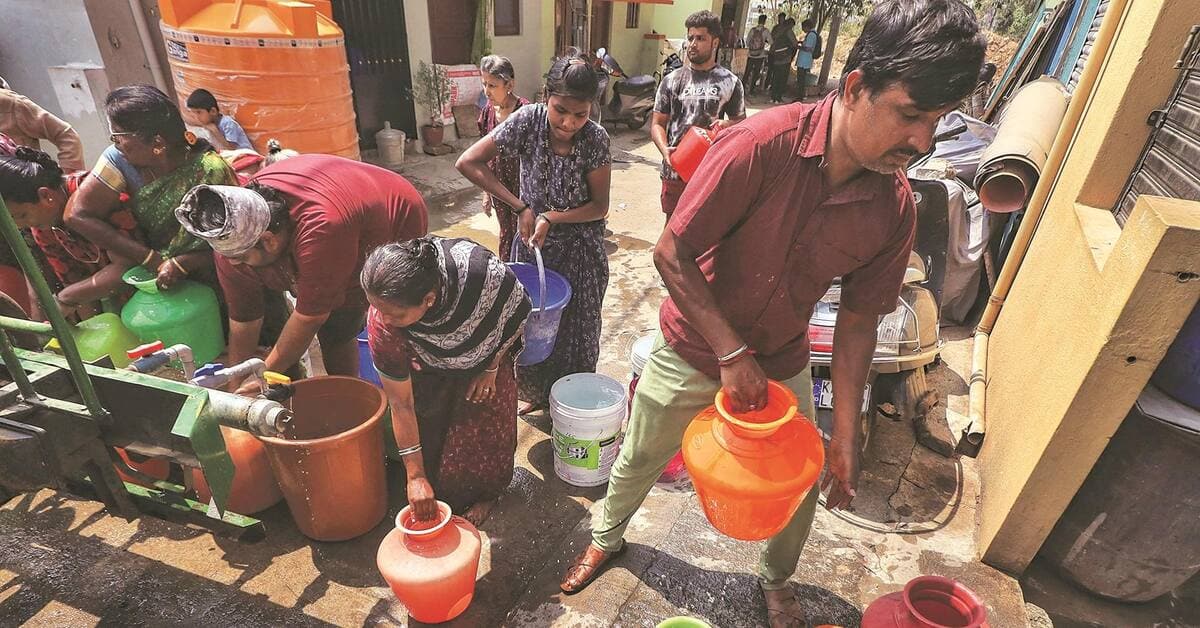
Image: Business Standard / PTI
India’s 178 major reservoirs held 126.717 billion cubic metres (BCM) of water, or 68.58% of their usable capacity, as the monsoon season ended, according to the Central Water Commission’s (CWC) weekly storage bulletin released on Thursday, October 15. The shortfall is sharpest in the south, where several states have declared drought after a weak southwest monsoon.
Storage Below Last Year and the Ten-Year Normal
The 178 reservoirs together have a usable capacity of 184.762 BCM, about 72% of the country’s total. Current storage is 41.193 BCM, or 24.53%, lower than at the same time last year, and 24.930 BCM, or 16.44%, below the normal based on the ten-year average, Down To Earth reported from the bulletin.
Twelve of the 20 reservoirs linked to hydropower projects were at or below normal storage. Some large dams were far below their usual levels, including Idukki in Kerala, Ujani and Jaikwadi in Maharashtra, Tungabhadra in Karnataka, and Somasila and Srisailam in Andhra Pradesh.
Cauvery and Pennar Basins Worst Hit
By river basin, the Pennar is 72.32% below normal and the Cauvery 60.50% below, both classed as highly deficient. The Krishna basin is 32.59% below normal and the Sabarmati 38.03% below. In contrast, the Narmada, Mahanadi and Swarnarekha basins are above normal, while the Ganga, Godavari, Tapti and Brahmaputra are close to normal.
The southwest monsoon ended with a deficit of about 13%, Business Standard reported. Karnataka received 30% less rain than normal and has declared 226 of its 240 taluks drought-affected, while Andhra Pradesh has declared 388 mandals drought-affected for the kharif season.
Drinking Water and the Rabi Crop
Low storage affects both city water supply and irrigation for the coming rabi season. Tamil Nadu has received 44.208 TMC of Cauvery water against a normal 123.14 TMC, and Chief Minister Joseph Vijay met Andhra Pradesh Chief Minister N Chandrababu Naidu to seek extra drinking water for Chennai, the newspaper said.
Telangana’s government has already asked farmers to consider alternatives to water-intensive paddy, as we reported in Telangana CM Urges Farmers to Skip Rabi Paddy to Save Drinking Water. Delta farmers’ leader K V Elankeeran said, “We are short of rain, water, and production already.”
The northeast monsoon, now active over Tamil Nadu, could add some inflow to southern reservoirs in the coming weeks. The CWC will publish its next bulletin on Thursday. Earlier coverage of the Cauvery delta is in our report on the Mettur dam.
Based on the Central Water Commission bulletin and reporting by Down To Earth and Business Standard.
Image: Business Standard / PTI.